
Air purifiers enhance bedroom air quality by utilizing effective filters. Use HEPA filters that capture at least 99.97% of pollutants, and consider a high CADR, which suits your room size. Position purifiers 3-5 feet from your bed and maintain at least 15 inches from walls and furniture. Replace filters every 60 to 90 days for peak performance. Avoid corners and electronic devices to enhance airflow. Discover more about ideal practices and considerations for air purifiers in your space.
Key Takeaways
- Choose air purifiers with HEPA filters for effective removal of pollutants like dust mites and pet dander in bedrooms.
- Ensure the CADR rating matches your bedroom size; a higher CADR is essential for larger rooms for optimal air quality.
- Place air purifiers 3-5 feet from your bed and at least 15 inches from walls to maximize airflow and effectiveness.
- Maintain filters by replacing HEPA filters every 6-12 months and cleaning pre-filters weekly to sustain performance.
- Avoid placing air purifiers in corners or behind furniture to prevent airflow blockage and ensure proper air purification.
Understanding Air Purifiers: How They Work
Air purifiers play an essential role in maintaining indoor air quality. These devices draw in polluted air through filters. They capture various particles, including dust, pollen, and smoke, improving overall air cleanliness. The effectiveness of air purifiers varies, which is why it’s vital to check the Clean Air Delivery Rate (CADR) for performance. High CADR ratings indicate better airflow in larger spaces. Portable air purifiers often combine filtration methods, utilizing High-Efficiency Particulate Air (HEPA) filters for particulate matter and activated carbon filters for odors. For optimal outcomes, consider the placement of your air purifier to enhance airflow patterns and reach more areas. Regularly maintain your unit, particularly replacing clogged filters, to safeguard respiratory health against common pollutants. A 3-in-1 filtration system is highly effective in capturing a variety of airborne pollutants, making it a desirable feature in air purifiers.
The Importance of Filters in Air Purifiers

Filters are the heart of air purifiers, delivering essential air cleaning functions. HEPA filters effectively remove at least 99.97% of airborne pollutants, including dust mites and pollen. Combined with an activated carbon filter, these systems also control odors and volatile organic compounds (VOCs). Check the Clean Air Delivery Rate (CADR) to guarantee the air purifier meets the room’s needs. Regular filter replacement is vital—do this every 60 to 90 days, depending on usage. Clogged filters can reduce air purification efficiency by up to 50%. Always select models with filters rated for specific contaminants common in bedrooms, like allergens or smoke. This guarantees peak indoor air quality and effective air purification for healthier living spaces. Using hypoallergenic pillow protectors can further reduce exposure to dust mites and allergens, complementing the air purifier’s effectiveness in maintaining an allergy-free environment.
What Is CADR and Why It Matters
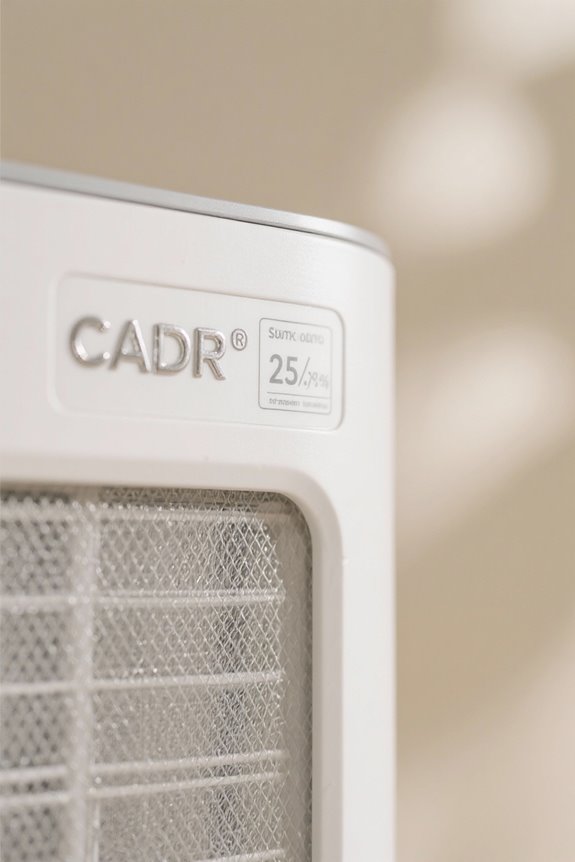
Understanding Clean Air Delivery Rate (CADR) is crucial when choosing an air purifier. CADR measures the effectiveness of an air purifier in removing specific pollutants, such as dust, pollen, and smoke. Higher CADR values indicate better performance, especially in larger rooms. For ideal air quality, match the CADR of the air purifier to your room size; for example, a CADR of 130 is perfect for a 100 sq ft room, while 390 is recommended for a 500 sq ft area. This measurement guarantees that the air purifier can effectively filter air, considerably improving indoor air quality. Knowing the CADR helps consumers select an efficient air purifier that meets their specific filtering needs, thereby maintaining desired air quality levels. Similar to how anti-shake bed stabilizers enhance furniture stability and noise reduction, CADR values ensure that air purifiers are effective in maintaining a peaceful indoor environment.
Best Placement for Air Purifiers in the Bedroom

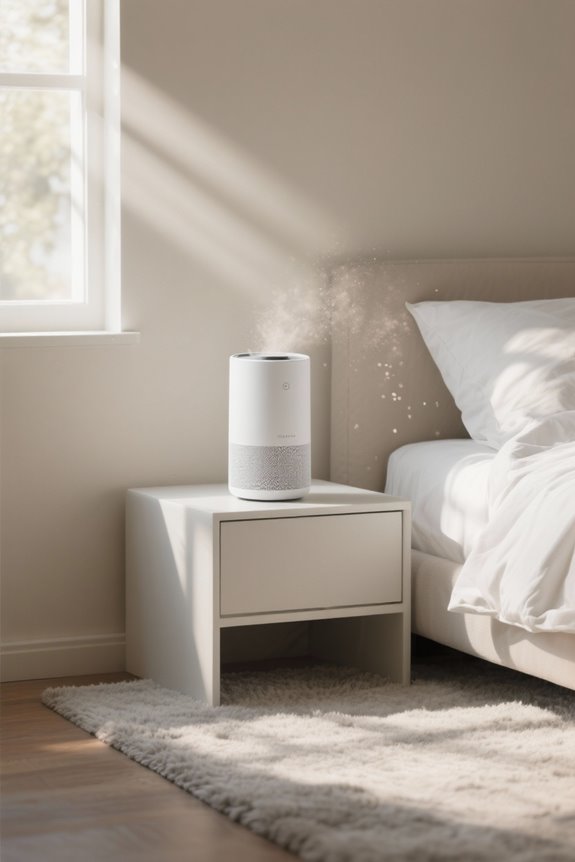
Placing an air purifier correctly in the bedroom greatly impacts its effectiveness. The best place to put an air purifier is on a nightstand or small table, ideally 3-5 feet from the bed. This height captures particles effectively, ensuring peak performance. Maintain at least 3 feet of clearance around the device to allow for unobstructed airflow. Positioning the air purifier close to the bed creates a clean air bubble, considerably reducing pollutant concentrations. Avoid corners or behind furniture, as these locations hinder air circulation. For maximum efficacy, operate the purifier continuously. Run it at high speed before bedtime, then switch to low speed during the night for consistent air quality and improved breathing zones. Including a lavender chamomile pillow spray can further enhance the relaxation and sleep quality in your bedroom environment by creating a calming aroma.
Factors to Consider When Choosing a Location

When choosing a location for an air purifier, several key factors must be taken into account. Position the air purifier 3-5 feet off the ground to effectively capture airborne particles. Guarantee at least 3 feet of clearance around the unit for ideal airflow and performance. Place the air purifier on a nightstand or a small table close to the bed to provide clean air during sleep. Avoid corners or behind furniture, as these placements can block airflow and reduce effectiveness by over 50%. Also, consider the proximity to electrical outlets to avoid hazards associated with extension cords. Bed bug interceptor traps are passive trapping systems that can be used in conjunction with air purifiers to maintain a pest-free environment. By focusing on these factors, one can maximize the air purifier’s ability to reduce pollution in the bedroom.
Common Pollutants Found in Bedrooms
Bedrooms often harbor various pollutants that can negatively impact health and sleep quality. Common pollutants include dust mites, which thrive in bedding and upholstery, triggering allergies and respiratory issues. Volatile Organic Compounds (VOCs) can be released from furniture and paints, contributing to poor air quality and causing headaches. Pet dander from cats and dogs often exacerbates allergy symptoms. Mold spores, found in damp areas, are another significant source of airborne pollutants, potentially leading to respiratory complications. Additionally, carbon dioxide levels can rise in poorly ventilated bedrooms during sleep, affecting oxygen levels. To improve air quality, regularly clean bedding, use an air purifier, and guarantee proper ventilation to reduce these common pollutants. Incorporating a humidifier with essential oil trays can also enhance air quality by maintaining moisture levels and adding soothing fragrances.
The Impact of Air Quality on Sleep
Air quality greatly affects sleep quality and overall health. Poor air quality can lead to higher carbon dioxide levels, causing grogginess and reduced cognitive function. Airborne particles, such as dust mites and pet dander, worsen nighttime allergies, disrupting sleep cycles. This results in decreased sleep quality. Using air purifiers in the bedroom can enhance air quality. Filters in these devices capture air pollutants and reduce VOCs, which may come from furniture and paint. Proper placement of air purifiers near the bed, following placement principles, can improve sleep quality by up to 2.5 times. Maintaining ideal humidity levels (30-50%) also helps discourage mold growth and dust mites, contributing to better respiratory health. Humidifier diffuser combos with silent operations and BPA-free materials can further enhance air comfort and safety. Consequently, improved air quality leads to better sleep.
Maintaining Optimal Airflow Around Your Purifier
To guarantee effective air purification, maintain ideal airflow around the device. Confirm at least three feet of clearance around the air purifier for unobstructed airflow and optimal performance. Avoid placing the unit in corners or behind furniture, as this hinders air intake and reduces purification effectiveness. Position the purifier at a height of three to five feet to align with the breathing zone, allowing it to capture airborne particles more effectively. Maintain a minimum distance of 15 inches from walls and objects to improve airflow direction and circulation. Regularly clean pre-filters and replace HEPA filters to prevent clogging, as clogged filters can drastically reduce efficiency and disrupt consistent air delivery. Proper placement is essential for achieving maximum purification benefits. Incorporating a breathable material in your air purifier’s design can enhance airflow and improve the overall efficiency of the device.
Operating Tips for Enhanced Air Quality
Effective air quality in a bedroom can be greatly improved by establishing a consistent operation of air purifiers. Keep air purifiers running continuously, especially overnight, to combat persistent air pollution. Clean pre-filters weekly and replace HEPA filters every 6-12 months to maintain ideal efficiency. Position the air purifier at a height of 3-5 feet to align with the breathing zone. Guarantee at least three feet of clearance around the device for unobstructed airflow. Smart technology models can enhance air quality by adapting to environmental changes. Monitoring CADR ratings will help assess air purifier effectiveness. Following these tips will considerably improve air quality, facilitating healthier breathing conditions in the bedroom.
Humidifiers and Their Relationship With Air Purifiers
Maintaining a balanced indoor environment is important for health and comfort. Humidifiers help sustain humidity levels between 30-50%. This range minimizes dust mites and mold growth, enhancing air quality alongside air purifiers. When used together, position humidifiers opposite air purifiers to prevent overwhelming filters with moisture. Excess humidity can increase VOCs and mold spores, which compromises air quality. For best results, operate both devices continuously, especially during dry seasons. This setup captures pollutants and maintains appropriate moisture levels. Use a hygrometer to monitor humidity levels. Confirm the combined use of humidifiers and air purifiers effectively addresses indoor air quality without promoting harmful mold development. Proper placement and operation will maximize efficiency and improve overall room conditions. It’s important to select a humidifier with a large tank capacity to ensure longer runtimes and reduced frequency of refilling, particularly in larger spaces.
Adapting Placement for Room Size and Layout
Placement of air purifiers greatly impacts their effectiveness in the bedroom. Match the Clean Air Delivery Rate (CADR) rating with your room size for maximum performance. Place the purifier in a central location to maximize coverage and airflow. Avoid corners and tight spaces that obstruct air circulation. For larger rooms, consider using multiple purifiers positioned diagonally or across from each other to enhance air movement. Maintain a distance of at least three feet from your bed to guarantee clean air reaches you without obstruction. Place the device at a height of 3-5 feet for effective filtration, capturing pollutants effectively. Ensure unobstructed airflow by keeping the area around the purifier clear of furniture or other obstacles. Consider installing NICETOWN Thermal Insulated Blackout Curtains to further improve air quality by reducing outside noise and maintaining comfortable indoor temperatures.
Obstacles to Avoid for Effective Air Purification
To guarantee air purifiers operate at peak efficacy, certain obstacles must be avoided in their environment. First, place air purifiers at least three feet away from walls and furniture to promote optimal airflow. Avoid corners which create stagnant air pockets that reduce performance. Do not position the unit behind or under furniture, as this blocks air intake and output, decreasing efficiency. Keeping the purifier away from electronic devices and heat sources is essential, as these can interfere with its function. Finally, avoid using air purifiers in high-humidity areas such as bathrooms. Doing so can lead to mold growth on filters and overall performance issues. Maintaining a clear space around the unit promotes better air purification results.
Frequently Asked Questions
Where Should Air Purifiers Be Placed in the Bedroom?
Air purifiers should be strategically placed to enhance airflow dynamics, ideally at a height of 3-5 feet. Avoid corners and walls, considering room size and furniture arrangement; multiple purifiers and ceiling fans can improve ventilation impact.
What Is a Good CADR for Air Purifiers?
A good CADR rating illuminates air quality’s path, guiding choices among purifier types. For ideal allergen removal, consider room size, maintenance tips, energy efficiency, and noise levels, while heeding user reviews to guarantee longevity and effectiveness.
How Much CADR Is Good for an Air Purifier?
A good CADR for an air purifier depends on room size and desired air quality. For best performance, prioritize energy efficiency, filter types, noise levels, and health benefits while considering pricing options and maintenance tips for allergy relief.
Is It Good to Have an Air Purifier in Your Bedroom?
The notion that air purifiers could enhance bedroom comfort—while soothing allergens, boosting sleep quality, and being a safe electronic companion—belies the truth: they require meticulous maintenance, and energy levels can sometimes rival a small spaceship.