
To integrate blackout shades without adding bulk, combine them with sheer options for flexibility. Use lightweight fabrics for sheers and heavier ones for blackout shades. Mount outside the window frame to eliminate light gaps. Consider double tracks for independent operation and motorized systems for convenience. Choose neutral colors and similar textures for a cohesive look. Maintain clean installations with precise measurements. Learn additional strategies to enhance light control and design aesthetics throughout your space.
Key Takeaways
- Choose lightweight blackout fabrics that seamlessly blend with sheer options for an elegant layering effect without adding visual bulk.
- Utilize double tracks to operate sheer and blackout shades independently, allowing for flexible light management in a minimalist design.
- Opt for outside mount installation to extend shades beyond window frames, effectively preventing light gaps while maintaining a sleek appearance.
- Incorporate motorized systems into your design for convenience and a streamlined look, enhancing both functionality and aesthetics.
- Select neutral color palettes and similar textures for sheer and blackout shades to ensure cohesion and avoid overwhelming the space visually.
Understanding Blackout Shades and Their Benefits
When considering options for light control in design, blackout shades stand out as an effective solution. These window treatments block nearly 100% of external light, making them ideal for achieving total darkness in bedrooms and media rooms. They enhance privacy and light control by preventing outside views and reducing glare. Moreover, many blackout shades offer energy efficiency benefits by regulating indoor temperatures, leading to lower heating and cooling costs. Blackout roller blinds and cellular shades equipped with side tracks help in preventing light seepage at edges, maximizing effectiveness. Additionally, advanced blackout fabrics may be Oeko-Tex Standard 100 certified, ensuring a healthier indoor environment. Choose blackout shades for a modern design that effectively manages light while ensuring comfort. Many blackout canopy bed curtains also offer a >98% blackout effect, enhancing comfort during breezy nights.
Effective Layering Techniques for Light Control
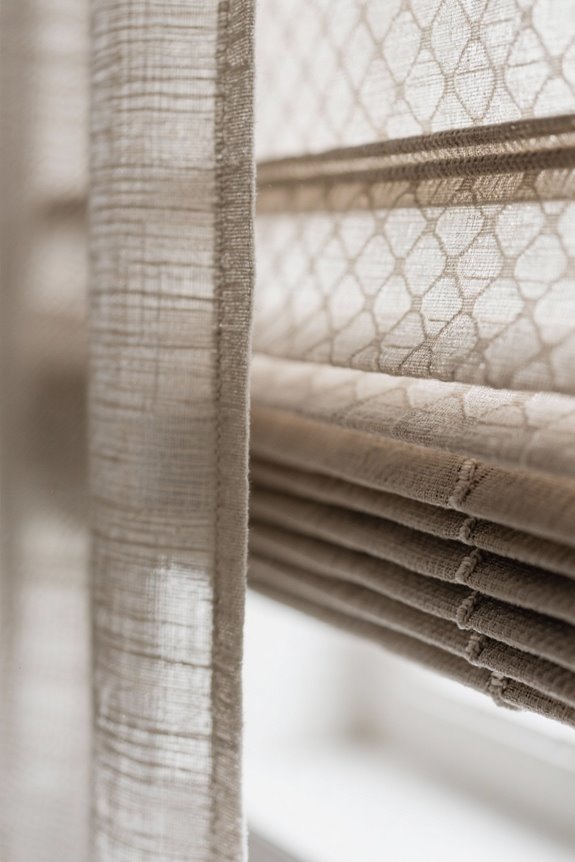
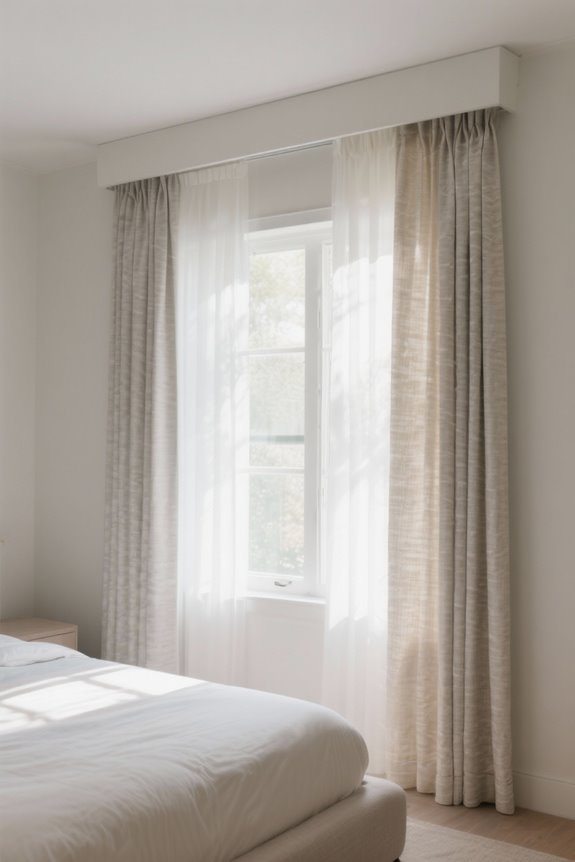
Layering techniques greatly enhance light control in any space. Combine blackout shades with layering sheer options for flexible light management. This approach allows easy adjustments for different moods without creating bulk. Utilize double tracks for sheer and blackout shades. This setup enables independent operation, ensuring ideal light control while maintaining a clean look. Select lightweight materials for sheer shades and heavier weaves for blackout shades, avoiding visual clutter. Proper installation is vital; mount shades outside the window frame, extending 2-3 inches to prevent light gaps. Consider incorporating motorized systems for added convenience and sleek design. These systems eliminate complicated chains or cords, promoting a minimalist aesthetic and energy savings. Blackout curtains also offer thermal insulation properties that help maintain comfortable indoor temperatures throughout the year, contributing to energy efficiency. Effortlessly control light with these effective layering techniques.
Choosing the Right Materials and Colors
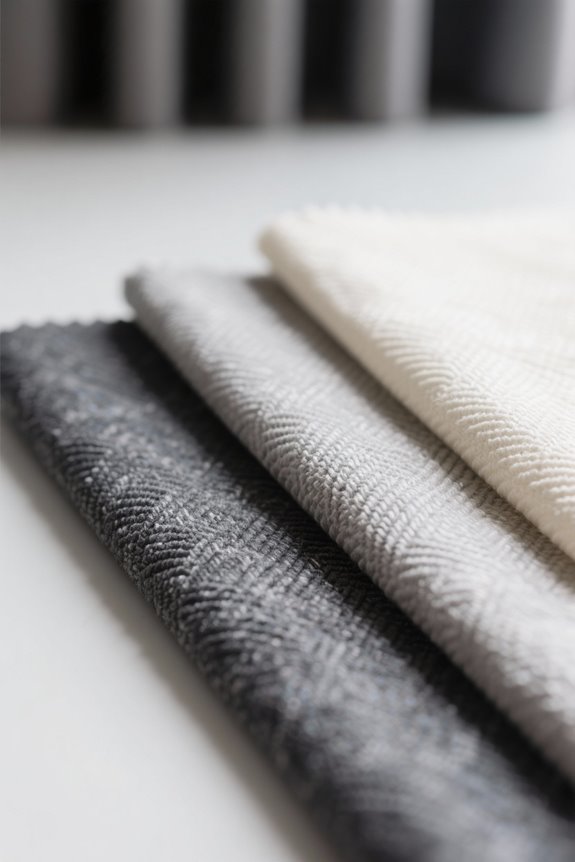
Choosing the right materials and colors is essential for effective light control in design. Select lightweight blackout fabrics alongside sheer options like polyester and linen. This choice maintains a clean aesthetic without overwhelming window spaces. Coordinate color palettes, using neutral colors to achieve a cohesive look while enhancing decor integration. Choose similar textures for sheer and blackout shades to prevent visual confusion and support a streamlined design. Verify precise measurements for inside-mounted shades to achieve a flush fit, which minimizes light leaks. Regularly check the compatibility of materials and colors to maintain continuity in your design. These steps create an effective light control system while keeping the environment visually appealing and comfortable. Additionally, consider materials with thermal properties to potentially reduce energy loss by up to 45%, enhancing both functionality and sustainability in your design.
Installation Options for a Sleek Profile
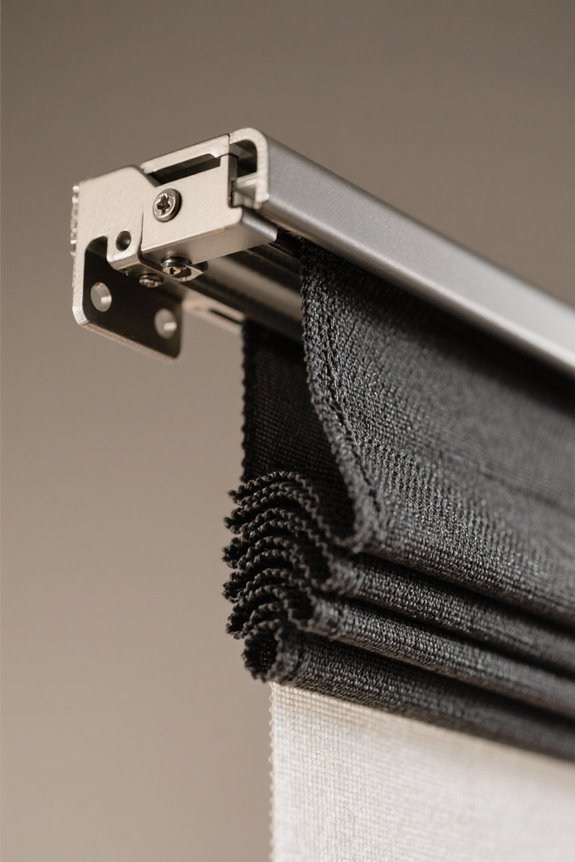
Effective light control begins with proper installation techniques that emphasize a sleek profile. Inside mount installation offers a flush look, perfect for deep window frames. This option minimizes visual clutter. For shallow or irregular frames, consider outside mount installation, extending shades 2-3 inches beyond the window frame. Accurate measurement is essential for both options to prevent light gaps. This precision enhances visual appeal across spaces. Employ modern hardware like low-profile double rods and slim tracks to neatly integrate layered treatments, maintaining a clean look. Additionally, motorized systems eliminate cords, providing a streamlined experience. Magnetic blackout shades offer thermal insulation benefits, improving energy efficiency and reducing noise in addition to light control. These installation options guarantee effective light management while maintaining a sophisticated and stylish aesthetic for any space. Choose wisely to achieve the best results.
Smart Solutions for Enhanced Functionality
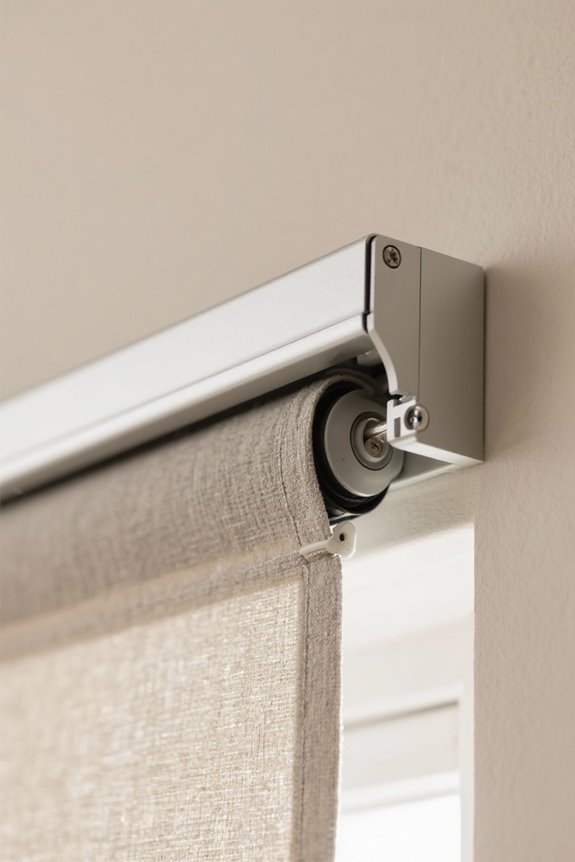
As homeowners seek to enhance functionality, smart shades offer an effective solution for light management. Starting at $399, smart shades feature remote control and scheduling options. These allow users to create personalized day and night routines. Motorized options provide seamless control over light, integrating easily into smart home systems. This capability permits simultaneous control of multiple shades via app or voice commands, increasing functionality and style. The low profile of roller and honeycomb shades guarantees a sleek appearance without bulk. For those interested in DIY installations, extensive setup guides and 24/7 technical support are available. Smart blackout solutions also promote energy efficiency, improving comfort without detracting from decor. Many blackout curtains reduce ambient noise levels effectively, ideal for improving focus. Such features greatly improve both usability and aesthetic appeal in the home.
Maintenance Strategies for Longevity
Proper maintenance is essential for guaranteeing the longevity of blackout shades. Regularly dust shades with a microfiber cloth or vacuum to prevent dust buildup. Clean the fabric as needed using a damp cloth with mild dish soap. Always perform spot tests on hidden areas to guarantee fabric colors remain unaffected. Conduct seasonal checks on both manual and motorized systems to ensure peak functionality. Operate shades gently to avoid damaging the mechanisms, as forceful pulling can lead to premature failure. Use window treatments with Oeko-Tex Standard 100 certification to guarantee fabrics are chemical-free, promoting a healthier environment and enhancing the lifespan of your shades. Blackout shades are often made of high-density polyester, which is crucial for effective light and UV blocking. By following these maintenance strategies, one can effectively control light levels and maintain the integrity of blackout shades.
Creative Design Ideas to Complement Your Space
Creative design ideas can greatly enhance the functionality and aesthetic appeal of any space. Start by layering sheer and blackout shades. This technique improves light control and adds textured depth. Use double tracks or low-profile double rods to allow independent movement of fabrics. Choose lightweight materials for sheers and heavier ones for blackout shades. This combination aids effective light management while maintaining visual cohesion. Incorporate motorized systems for smooth operation. This reduces visual clutter and integrates technology seamlessly. Select neutral colors for both treatments. This choice helps maintain a clean, unified look, enhancing the room’s overall ambiance. Implementing these ideas guarantees both design functionality and style, making your space inviting and visually appealing. For optimal noise reduction and thermal insulation, consider NICETOWN Thermal Insulated Blackout Curtains as they offer excellent sound absorption and energy efficiency.
Frequently Asked Questions
Can Blackout Shades Reduce Noise in Addition to Blocking Light?
Blackout shades can indeed reduce noise in addition to blocking light. Utilizing sound-absorbing materials enhances room acoustics, improving home comfort while maintaining design aesthetics. Effective installation methods optimize energy conservation and overall impact on the light spectrum.
How Do Blackout Shades Impact Room Temperature and Energy Efficiency?
Blackout shades enhance thermal insulation by minimizing sunlight exposure, contributing to energy savings and improved climate control. Their implementation promotes indoor comfort, aids temperature regulation, and offers cost efficiency through effective seasonal adaptation in home insulation.
Are Blackout Shades Available in Environmental-Friendly Materials?
Blackout shades, like guardians of tranquility, are available in eco-friendly options. Sustainable materials, organic fabrics, and recycled materials offer energy-efficient designs, while biodegradable textiles and non-toxic finishes boast green certifications, promoting a healthier environment.
What Are the Best Practices for Measuring Windows for Blackout Shades?
To measure windows for blackout shades accurately, one should consider window types, shade styles, and existing treatments. Employ measuring techniques using proper tools, account for light gaps, and consult professional advice on hardware and installation tips.
Can Blackout Shades Be Easily Removed or Replaced by Homeowners?
Blackout shades can be easily removed or replaced by homeowners using various removal methods and DIY installation. Homeowner preferences vary, considering shade durability, design aesthetics, and window types, along with tracking systems for seasonal adjustments and product considerations.