White noise can help infants sleep better when used correctly. Keep the volume below 50 dB, as this prevents hearing damage. Place sound machines at least 7 feet away from the crib to guarantee safe exposure. Limit usage to under eight hours daily, and use continuous sound for three minutes before and after sleep. Turn off the machine during awake times to allow moments of silence. These practices are essential for promoting restful sleep, with more tips available for consideration.
Key Takeaways
- Keep sound machines at least 7 feet away from the crib to optimize white noise benefits and minimize high sound level exposure.
- Set the volume below 50 dB, as recommended by the CDC, to prevent hearing damage in infants.
- Limit sound machine usage to under 8 hours daily to ensure the infant’s hearing safety and healthy sleep patterns.
- Use continuous white noise for one minute before sleep and three minutes after to aid infant sleep onset and length.
- Turn off the sound machine during awake periods to allow infants to experience natural silence and auditory development.
Understanding White Noise and Its Benefits for Infants
White noise serves as an effective tool for helping infants sleep better. Research shows that white noise exposure creates a comforting auditory environment similar to the womb. This can enhance infant sleep onset and length. Sound machines mask disruptive noises, contributing to consistent sleep routines. For ideal effects, place the machine at least seven feet away from the crib. Keep the volume below 50 dB to prevent hearing loss. These practices guarantee safety while supporting healthy sleep habits. Additionally, continued use of white noise can benefit older children and adults. It is essential to note that proper use does not adversely affect language development and may assist infants in developing self-soothing techniques. Use white noise thoughtfully to enhance infant sleep quality.
Safe Volume Levels for Sound Machines

Setting the appropriate volume level on sound machines is essential for infant safety. Parents should operate sound machines at safe volume levels, ideally below 50 dB, as recommended by the CDC. Many devices can exceed this level when positioned just 30 cm away. To protect against noise exposure during sleep, sound machines should be placed at least 200 cm from the sleeping area. It is also vital to limit usage to under 8 hours daily. Consider using a timer to manage this duration effectively. Regularly check the output levels, adjusting the volume so that normal conversations can occur at arm’s length. This practice minimizes the risk of noise-induced hearing loss for infants during sleep. Breathable design enhances air circulation, making them suitable for all seasons, ensuring a comfortable and safe environment for your baby.
Proper Distance and Placement of Sound Machines

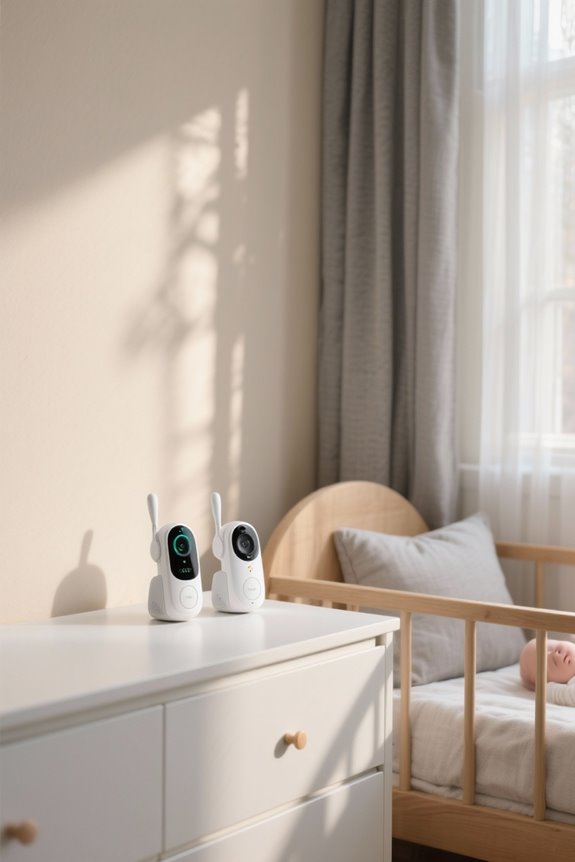
Proper placement of sound machines is essential for infant safety. Position sound machines at least 7 feet away from the infant’s sleeping area. Maintain a proper distance of at least 30 cm from the child to minimize exposure to high sound levels. Cords should be secured on stable surfaces, such as nightstands or dressers. Avoid placing sound machines in the crib. This prevents direct contact and reduces the risk of hearing damage. Sound machines should offer consistent sound to support better sleep patterns. Guarantee parents can easily monitor and adjust the device. Installing noise reducing curtains can further enhance sleep quality by minimizing ambient noise. Following these guidelines will create a safer sleeping environment, promoting restful sleep for the infant while protecting their hearing.
Duration of White Noise Exposure

When considering white noise exposure for infants, it is crucial to adhere to recommended durations. The ideal duration of white noise exposure is to create a continuous sound from one minute before sleep onset to three minutes after. Consistently using white noise throughout naps and nighttime sleep enhances sleep patterns. However, excessive noise exposure is discouraged; avoid using white noise machines for more than eight hours, especially for young infants. Ascertain that white noise is turned off during awake periods. This practice allows infants to experience natural silence and necessary auditory stimuli for language development. Maintaining these recommended durations supports a healthy sleep environment without compromising auditory health. Some white noise machines also offer non-looping sound technology, which helps prevent repetitive irritation and promotes a more restful sleep experience.
Monitoring and Adjusting Sound Machine Usage

Monitoring sound machine usage is vital for maintaining a safe and effective sleep environment for infants. Set the sound machine volume below 50 decibels to prevent hearing damage. Position the sound machine at least 7 feet away from the baby’s sleeping area for ideal sound exposure. Regularly observe the baby’s reactions to adjust volume levels as needed, ensuring comfort without disruption. Turn off sound machines during awake times to allow infants to hear natural sounds and develop important language skills. Utilize a decibel meter app to confirm sound machine levels stay within safe limits. Consistent monitoring safeguards hearing while creating a conducive environment for restful sleep, promoting healthy development in infants. Many comforters are designed for year-round comfort, providing warmth in winter and coolness in summer, which can enhance the overall sleep experience for both infants and adults alike.
Frequently Asked Questions
How Loud Should White Noise Be in a Nursery?
White noise in a nursery should ideally be maintained at safe levels between 45-60 dB to enhance sleep quality. Various machine types exist, but consistent monitoring is essential to prevent potential hearing damage to infants.
What Volume Should You Play White Noise At?
In a world echoing with boombox beats, experts recommend white noise machines operate between 45-55 dB, adhering to safety guidelines. Such volume effects balance sleep promotion with sound safety across various machine types for infants.
How Far Away Should a White Noise Machine Be?
A white noise machine should be placed at a preferable distance of at least 7 feet away from infants to mitigate potential white noise effects, ensuring safe machine placement while minimizing risks of loud noise exposure.
How Long Should You Leave White Noise on For?
Like a gentle wave lapping against the shore, white noise should ideally be left on for about 8 hours, adhering to duration guidelines. This approach complements sleep strategies and calming techniques, promoting a restful environment for infants.