

Cervical curvature is essential for neck comfort and sleep quality. Choose a pillow based on sleep position: medium-loft for back sleepers, firmer higher-loft for side sleepers, and soft low-loft for stomach sleepers. Evaluate pillow loft regularly, ideally every six months. Replace pillows every 1-2 years to maintain support. Opt for medium-firm or adjustable loft pillows for ideal alignment. Proper maintenance and material selection enhance comfort and performance. Further insights will clarify pillow choices and adjustments for better sleep.
Key Takeaways
- Proper cervical curvature supports neck alignment, reducing pain and enhancing airflow during sleep, which decreases snoring risks.
- Choose pillows based on sleep position: medium-loft for back sleepers, higher-loft for side sleepers, and low-loft for stomach sleepers.
- Loft height is crucial for spinal alignment; adjustable pillows can accommodate individual loft needs for optimal comfort and support.
- Material matters: medium-firm pillows maintain alignment, while memory foam offers contouring for cervical curvature, improving neck comfort.
- Regularly assess pillow support levels every six months, replacing pillows every 1-2 years to maintain comfort and alignment efficiency.
The Importance of Cervical Curvature for Sleep Quality
Cervical curvature is crucial for achieving quality sleep. This natural inward curve of the neck supports proper alignment of the cervical spine. When sleeping with correct curvature, neck pain decreases, and airways remain open, reducing snoring and potential sleep apnea. It is important to choose neck pillows that provide ergonomic support tailored to individual needs. Proper cervical support fosters ideal spinal alignment, which helps alleviate pressure points during sleep. Individuals should avoid pillows that do not maintain cervical curvature, as misalignment can cause headaches and disrupt sleep. Aim for correct positioning while sleeping for better sleep quality. Use a supportive neck pillow for improved comfort and well-being. Prioritize maintaining cervical curvature for restorative sleep every night. Choosing CertiPUR-US certified memory foam pillows can ensure safety and durability, contributing to overall sleep quality.
Choosing the Right Pillow Based on Sleep Position
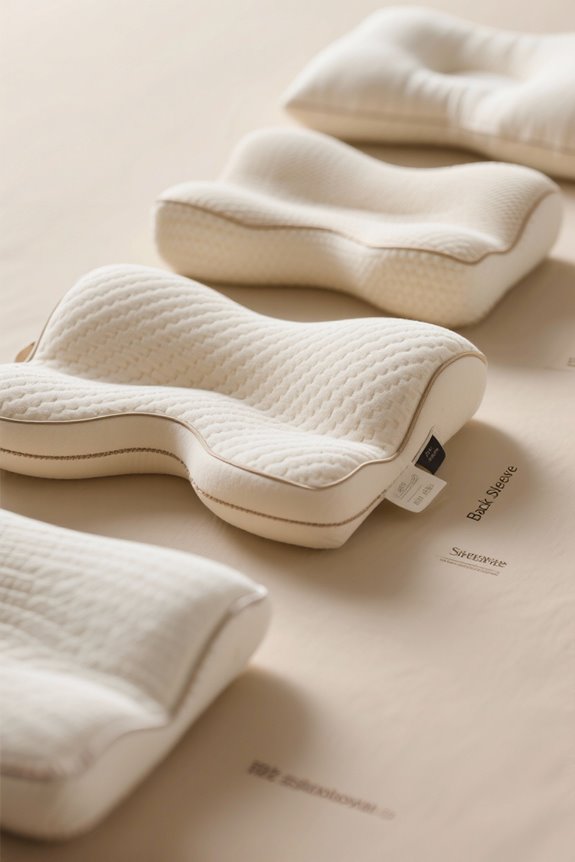
Selecting the right pillow based on sleep position greatly enhances sleep quality and comfort. Back sleepers should use medium-loft pillows that promote neutral spine alignment. Choose options with softer centers and firmer edges for proper support. Side sleepers need higher-loft, firmer pillows. These pillows fill the gap between the head and shoulder, guaranteeing correct cervical shape and reducing neck strain. Stomach sleepers should select soft, low-loft pillows or opt for no pillow at all. This prevents excessive strain on the neck and maintains spinal alignment. Adjustable pillows provide a versatile choice, allowing users to tailor loft and firmness to fit individual anatomy and comfort needs. Evaluate firmness levels carefully to guarantee proper neck alignment during sleep. Memory foam pillows often have hypoallergenic properties, helping reduce allergy symptoms due to their construction from CertiPUR-US certified materials.
Understanding Loft and Its Impact on Neck Support
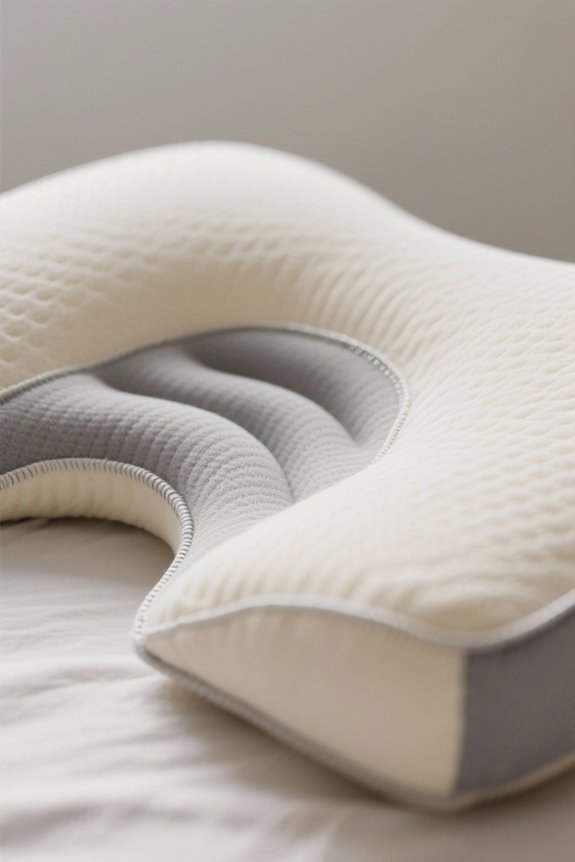
Loft plays an essential role in achieving proper neck support during sleep. It refers to the height of a pillow, which is vital for maintaining spine alignment. A pillow with the right loft fills the gap between the head and shoulders. It supports the cervical curvature, preventing neck pain and allowing for comfortable rest. Low loft is recommended for stomach sleepers, while side sleepers may benefit from higher loft options. Selecting an adjustable loft pillow allows users to customize height for individual needs. Inadequate loft can lead to misalignment, causing headaches and muscle strain. Proper loft not only enhances neck support but also improves sleep quality by promoting restful sleep and minimizing movements throughout the night. Many shredded memory foam pillows are designed to support various sleep positions, ensuring proper neck and spine alignment.
The Role of Pillow Material in Comfort and Alignment
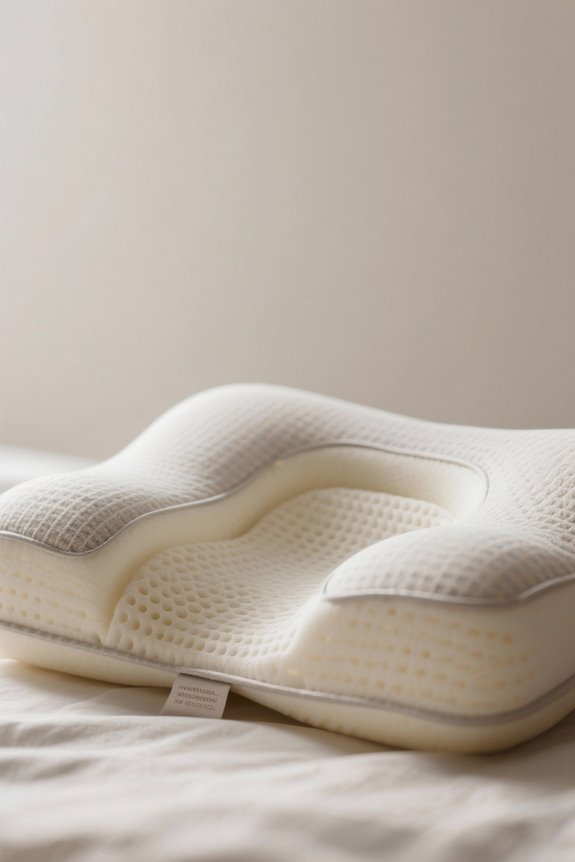
When choosing a pillow, consider the material that influences comfort and alignment. The foam structure offers support and adapts to individual anatomy, helping to relieve muscle tension. For side sleepers, a medium-firm pillow is ideal to maintain spinal alignment by filling the gap between the shoulder and head. Materials like memory foam can enhance cervical curvature by providing necessary contouring. Additionally, cooling materials, such as gel-infused foam or breathable fibers, are essential for those who tend to sleep hot. Down pillows provide flexibility but may not adequately support the neck. Selecting the right pillow for neck pain involves understanding personal preferences regarding softness and firmness based on sleeping position to promote overall comfort and quality sleep. Contour pillows often come with adjustable height options to provide personalized support and enhance spinal alignment for side sleepers.
Evaluating Pillow Shape for Optimal Cervical Support
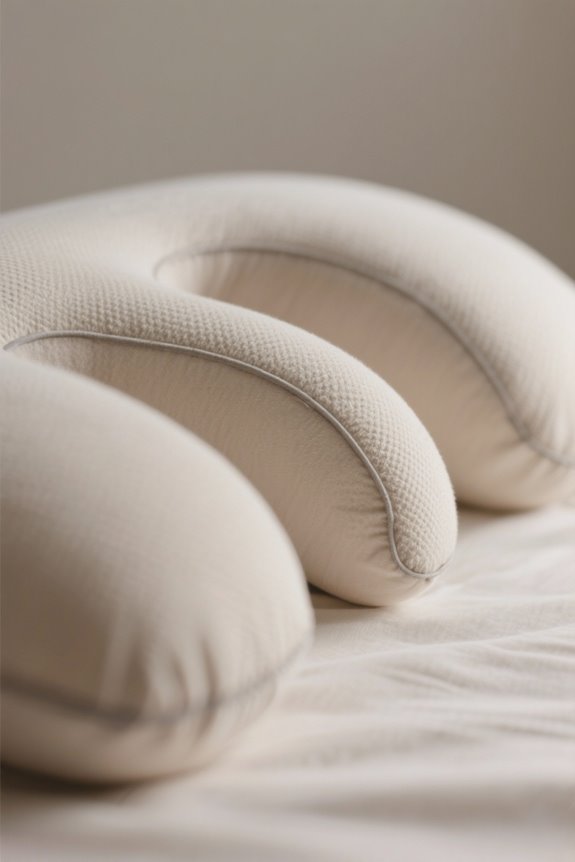
Pillow shape plays a pivotal role in achieving ideal cervical support. An ergonomic design, such as the butterfly shape, guarantees proper head and neck alignment, promoting better spinal posture during sleep. For side sleepers, select higher loft pillows to fill the space between the neck and shoulders. This helps maintain alignment and reduces strain. Back sleepers should consider medium-loft options for adequate neck support without excessive elevation. Specialized pillow shapes, including contour and cervical rolls, are designed to uphold the natural curvature of the neck. Using materials like memory foam enhances adaptability, contouring to individual neck shapes for maximum support. Evaluate pillow shape carefully to minimize pressure points and alleviate neck pain effectively. Many cervical pillows incorporate ergonomic designs tailored for neck pain relief, which can contribute to improved sleep quality.
Expert Recommendations for Pillow Selection
Selecting the right pillow is essential for ideal cervical support and overall sleep quality. For proper neck alignment, consider medium-firm pillows. Side sleepers should choose those with a higher loft to support the neck and head adequately. Back sleepers benefit from medium-loft options that maintain a neutral spinal position. Memory foam and latex pillows excel in contouring to the cervical curvature, enhancing comfort and support. Down pillows may not provide sufficient support for individuals with neck issues. Adjustable pillows allow customization of loft and firmness to match specific sleep positions. Consulting a healthcare professional or sleep specialist is recommended for personalized advice. This can help determine the best pillow for neck support based on individual needs. When selecting a cervical pillow, consider ergonomic designs that promote spinal alignment and offer pain relief.
Common Mistakes to Avoid When Choosing a Pillow
Choosing the right pillow requires careful consideration to avoid common mistakes that can affect sleep quality and neck support. Many individuals select a pillow based solely on initial comfort, overlooking the need for proper anatomical alignment. Side sleepers should opt for a firm, medium-loft pillow to support their posture, whereas back sleepers typically benefit from a softer, medium-loft option. Additionally, keeping old pillows beyond their lifespan compromises support; replace pillows every 1-2 years for ideal comfort. Make sure the pillow size matches your shoulder width for proper elevation. Finally, do not ignore adjustability features, as many pillows can be customized for individual neck shapes, enhancing alignment and overall comfort during sleep.
Adjusting Your Pillow for Personalized Comfort
For ideal sleep, adjusting pillow height is essential for aligning the cervical spine. Side sleepers should choose pillows with a higher adjustable loft to fill the gap between their shoulder and head. Back sleepers generally need medium-loft pillows for optimal neck and spine alignment. Consider ergonomic pillows, like memory foam options, which offer custom support tailored to unique neck curves. These pillows can often be flipped or rotated for enhanced personalized comfort. Regularly assess the firmness and loft of your pillow to ascertain it meets your support needs. Replace pillows that have lost their shaping ability after one year of use to maintain proper neck alignment and improve overall sleep quality. A gusseted design offers extra height and support, which can significantly enhance spine alignment, especially for side sleepers.
How to Maintain Proper Pillow Support Over Time
To maintain proper pillow support over time, it is critical to regularly evaluate several key factors. Assess your pillow’s height and firmness at least every six months. Replace pillows every 1-2 years if they lose shape or comfort. Adjust pillow loft according to sleeping position and body frame; side sleepers require higher-loft pillows for adequate neck curvature. Monitor sleep quality closely and note any neck or shoulder discomfort. Persistent pain may indicate insufficient pillow support. Clean and maintain your pillow according to the manufacturer’s instructions. Spot clean as needed to avoid clumping. Take advantage of trial periods offered by many brands to guarantee a new pillow meets your neck support needs before making a purchase. For those seeking a luxurious sleep experience, consider using Mulberry silk pillowcases which offer additional benefits like reduced hair frizz and skin moisture retention.
Frequently Asked Questions
What Is the Best Pillow Arrangement for Neck Pain?
For effective neck pain relief, a medium-loft pillow suits back sleepers, while side sleepers require higher loft for proper alignment support. Memory foam and latex materials enhance firmness levels and temperature regulation, even for travel pillow options.
What Kind of Pillow Do Chiropractors Recommend for Neck Pain?
Chiropractors recommend pillows made of memory foam with adjustable height and hypoallergenic materials for ideal cervical support. These pillows enhance alignment techniques suitable for various sleeping positions, emphasizing appropriate pillow firmness to alleviate neck pain effectively.
Do Cervical Pillows Work for Neck Pain?
Cervical pillows, known for their ergonomic design and supportive materials, effectively provide cervical support and spinal alignment. Users often experience pain relief and reduced muscle tension, tailored to individual sleeping positions for ideal comfort.
Do Neck Hump Pillows Actually Work?
Neck hump pillows, surprisingly effective, boast considerable hump pillow benefits, emphasizing neck alignment importance. Their cervical support design features pressure relief mechanisms that enhance sleep quality improvement, with user experience testimonials underscoring positive spinal health implications for many.