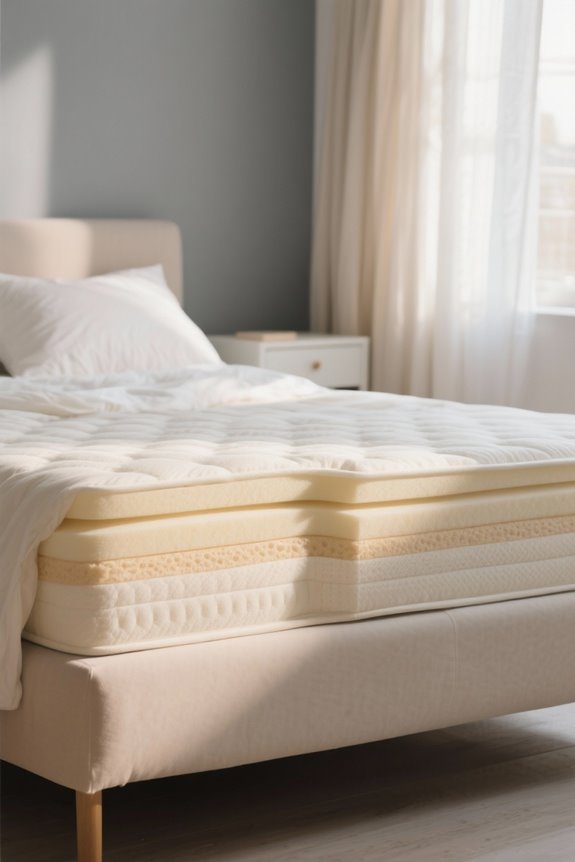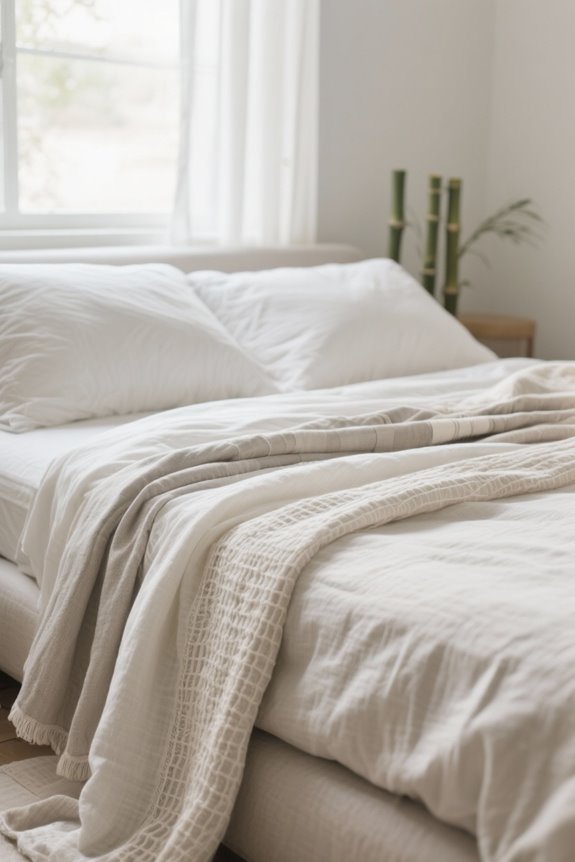

Cotton, bamboo, linen, and TENCEL™ each offer distinct properties that influence sleep comfort. Cotton is soft but may trap heat. Bamboo wicks moisture effectively and adapts to body temperature, enhancing coolness. Linen promotes airflow and is durable, suitable for warm climates. TENCEL™, derived from eucalyptus, excels in breathability and moisture management, minimizing skin irritation. Consider these traits carefully to select the best bedding material. More insights on fiber impacts and benefits await further exploration.
Key Takeaways
- Bamboo fibers are soft and moisture-wicking, providing a cool sensation ideal for hot sleepers during the night.
- TENCEL™ fibers excel in breathability and moisture management, ensuring a comfortable sleeping experience.
- Cotton offers natural softness but may trap heat, which can lead to discomfort for those who sleep hot.
- Linen promotes airflow, making it suitable for warm climates but may require layering in cooler weather.
- All four fibers are eco-friendly and hypoallergenic, with bamboo and TENCEL™ particularly beneficial for individuals with sensitivities.
Overview of Fiber Properties
When considering materials for sleep, understanding fiber properties is essential. Bamboo fibers are exceptionally soft and benefit from moisture-wicking characteristics, aiding in temperature regulation and ensuring a cool feel during the night. Bamboo mattress pads also feature hypoallergenic properties, making them ideal for individuals with allergies or sensitive skin. TENCEL™ fibers, sourced from eucalyptus, are known for their silky-smooth texture, breathable nature, and superior moisture management, making them ideal for sensitive skin. Cotton remains popular for its natural softness and breathability, but under heavier weaves, it can trap heat and moisture. Linen, derived from flax, provides a coarse texture that promotes airflow, though it may require layering in cooler seasons. All four fibers exhibit eco-friendliness and hypoallergenic properties, with bamboo and TENCEL™ particularly favored for sleepers with sensitivities.
Cotton: The Classic Choice

Cotton stands out as a classic choice for bedding, recognized for its comfort and versatility. This breathable fabric is soft and durable, appealing to many sleepers. However, traditional cotton sheets may trap heat and moisture, creating discomfort for hot sleepers. Be aware of cotton’s environmental impacts; its conventional production requires high water usage and pesticides. For a more sustainable option, consider organic cotton, as it is grown without harmful chemicals and meets strict standards. While cotton is known for its softness, achieving hypoallergenic properties and moisture-wicking abilities may require additional treatments. Consequently, evaluate your needs carefully when choosing cotton bedding, balancing comfort against durability and environmental considerations for the best sleeping experience. Additionally, materials like bamboo offer hypoallergenic and breathable qualities, making them ideal for hot sleepers seeking a cooler and more comfortable night’s sleep.
Recommended Products
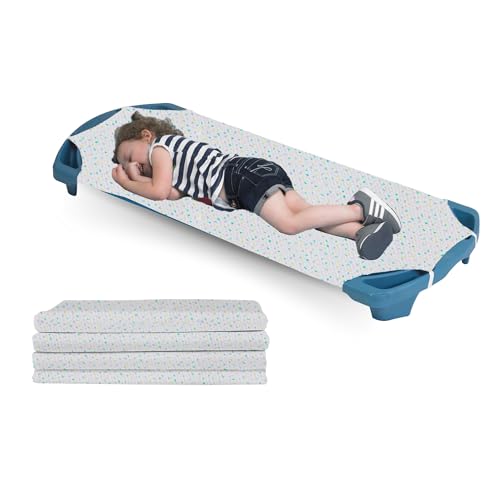
SECURE FIT FOR DAYCARE COTS: Designed with elastic loops at each corner, each daycare cot sheet securely fastens to cots for kids, ensuring a snug fit and a smooth sleeping surface.

TOXIN-FREE – this mattress contains no petrochemical polyfoams, no fiberglass, no toxic flame retardants, and as of January 2025 our updated design no longer contains a rayon-poly blend. Just cotton, wool, natural latex and springs - those are the only ingredients in this mattress.

JOY LINEN DESIGN: Sweet dreams are only a duvet away. Colorful and abstract, this gorgeous print was inspired by a paper vintage dress our designers discovered at the famous Brimfield Antique Market in Massachusetts. Expertly constructed of 100% natural linen, this duvet is the perfect weight and warmth for all seasons.
Bamboo: Luxury and Sustainability Combined

Bamboo bedding offers a blend of luxury and sustainability. Bamboo sheets provide luxurious softness and comfort, making them a preferred choice for many. This sustainable option utilizes rapidly renewable bamboo plants, requiring minimal irrigation and environmental resources. The hypoallergenic properties create a safe sleeping environment, accommodating sensitive skin and allergies. Bamboo fibers exhibit excellent moisture-wicking abilities, wicking sweat 24% faster than cotton, ensuring a cool, comfortable sleep experience. The closed-loop production process emphasizes environmental responsibility, avoiding harmful chemicals. Bamboo’s soft, silky texture enhances sleep quality, while its natural antimicrobial properties inhibit bacteria and dust mites. OEKO-TEX certification ensures the absence of harmful substances in bamboo sheets, making them a safe choice for families, including infants. Choose bamboo sheets for a combination of elegance and eco-friendliness that benefits both sleep and the planet.
Recommended Products

Made from 100% CleanBamboo Lyocell — organic non-toxic solvents used for material processing. No caustic soda, toxic dyes, formaldehyde or other harsh chemical used.

Luxury GOOSE DOWN comforter provides medium warmth for year-round comfort

Luxuriously Soft Fabric: Cariloha Retreat Sheets are crafted from lyocell material with a premium sateen weave, offering an ultra-soft, silky feel. These sheets provide a luxurious sleep experience, combining comfort and elegance.
Linen: Breathable and Durable
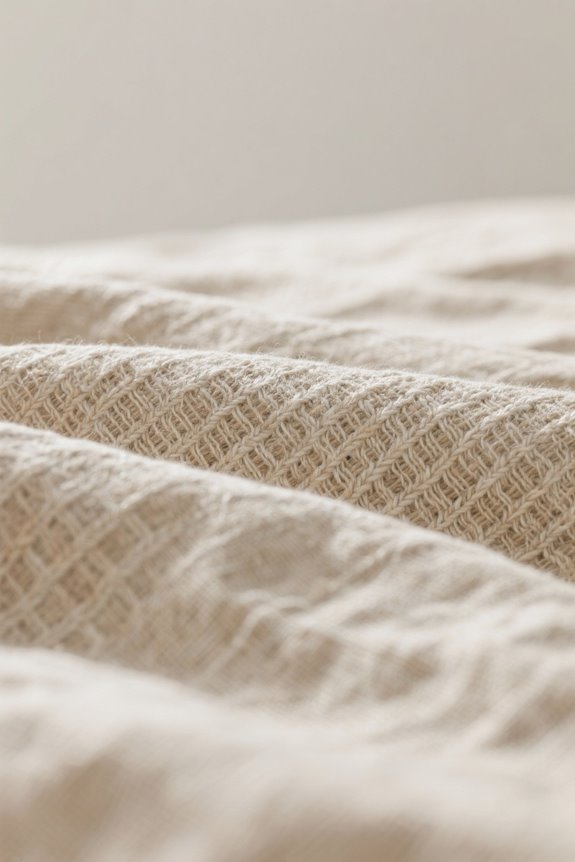
Linen’s properties make it a superior choice for bedding, especially for those seeking breathability and durability. Made from flax fibers, linen provides exceptional moisture-wicking abilities that guarantee effective temperature regulation. This feature keeps sleepers cool throughout the night. Its breathability allows air circulation, making it ideal for hot climates and individuals prone to overheating. Linen is also known for its durable nature, withstanding frequent washing while remaining strong over time. As it ages, linen becomes softer, enhancing comfort and texture. Additionally, its natural hypoallergenic and antimicrobial qualities resist mold and dust mites, fostering a cleaner sleep environment. By choosing linen for bedding, individuals can combine softness, comfort, and practicality into their resting spaces. Similar to linen, 100% cotton options in matelassé coverlets provide breathable comfort and are easy to care for, adding both luxury and style to bedding.
Recommended Products
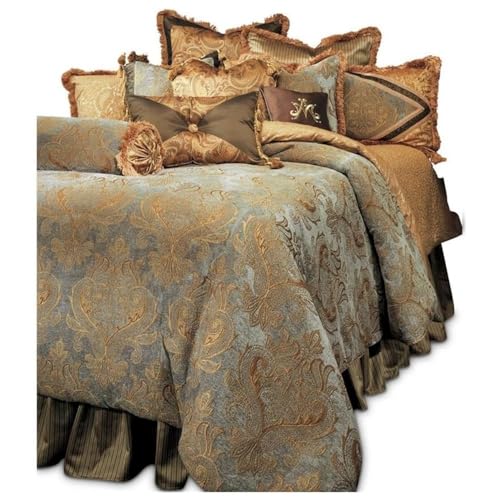
Comprehensive Set: Includes 13 coordinated pieces to fully outfit your king-size bed, ideal for an inviting retreat and cohesive bedroom style throughout the season.

OEKO-Tex Standard 100 Certification - Proven by the Oeko-Tex certification, which ensures that THXSILK fabric and filling material was constructed with healthy materials

LUXURY 4PC SILK SHEETS FOR BED: This silk queen sheet set includes: 1 x silk flat sheet 91"x102"(231*259cm) , 1 x silk fitted sheet 60"x80"+16"(152*203+40cm), 2 x silk pillowcase 20"*30"+2"(50*75cm)
Tencel: Eco-Friendly Innovation

Tencel offers an innovative option for those prioritizing sustainability in their bedding choices. This eco-friendly fabric is produced from sustainably sourced eucalyptus wood pulp. Its manufacturing process employs a closed-loop system, which recycles 99% of the water used and utilizes non-toxic solvents. This reduces the environmental impact compared to traditional fabrics. Tencel avoids harmful chemicals often found in other processes, making it a safer choice. Additionally, Tencel fibers possess moisture-wicking properties, effectively regulating body temperature and enhancing comfort for hot sleepers. 100% organic options ensure eco-friendliness and are often certified by OEKO-TEX and FSC, confirming safe and responsibly sourced materials. As a biodegradable fabric, Tencel contributes positively to sustainability, naturally decomposing at the end of its life cycle. Choosing Tencel supports a more sustainable future while enjoying comfortable bedding solutions.
Recommended Products

【Summer Lightweight Airy Series】 Tailored for the warm summer season, this comforter expertly combines a light, breathable fabric crafted from a Tencel/organic cotton blend with premium white duck down in a summer fill weight. Naturally light, airy, and effective at wicking away moisture, the down ensures unparalleled sleeping comfort.

【Selected high-quality materials】 Viscose from bamboo & organic tencel sheet set. Softer than silk, more breathable than cotton, gentler than bamboo fiber.Exceeding the comfort of ordinary cotton and bamboo fibers while avoiding the disadvantages of easy snagging and difficult maintenance of real silk

Patented Outlast fibers and TENCEL lyocell blend gets softer with each wash
Comparison of Softness and Feel
When choosing bedding, softness and feel are essential factors. Bamboo sheets provide a cloud-like texture that is softer than most cotton options. This makes them ideal for those seeking luxurious comfort during sleep. TENCEL™ sheets offer a smooth texture, renowned for their drapey feel, which is perfect for sensitive skin. While both bamboo and TENCEL™ are soft and breathable, TENCEL™ enhances overall comfort with its refined surface. This fiber is less prone to wrinkling, maintains a crisp appearance, and contributes to a premium feel. In contrast, linen has a coarse initial texture, lacking the silky smoothness found in TENCEL™, making the latter a superior choice for an elevated sleeping experience. Choose wisely for best comfort. Additionally, bamboo blankets are known for their high moisture-wicking capabilities, helping keep sleepers cool and comfortable, especially important for hot sleepers or night sweaters.
Moisture-Wicking and Breathability
Effective moisture-wicking and breathability are essential for a comfortable sleep environment. Bamboo sheets wick moisture away 24% faster than cotton, making them ideal for hot sleepers. TENCEL sheets also excel in moisture-wicking, providing a cool-to-the-touch sensation that enhances comfort. Both bamboo and TENCEL fabrics guarantee superior breathability, with bamboo being 17% more breathable than cotton. This contributes to improved airflow, allowing for a more restful night’s sleep. While linen offers some breathability, it can trap heat and moisture, making it less suitable for those who sweat during sleep. Additionally, TENCEL is eco-friendly, using 99% recycled water in production, enhancing its moisture management abilities. Choosing the right fabric promotes an overall better sleep experience. Mulberry silk pillowcases, known for their temperature regulation properties, also contribute to a comfortable sleep environment by keeping you cool in warm weather and warm in cooler climates.
Temperature Regulation in Bedding
Temperature regulation in bedding is essential for a good night’s sleep. Bamboo sheets excel in this area by naturally adapting to body temperature. They provide a cool sensation that enhances comfort for hot sleepers while wicking sweat 24% faster than cotton. TENCEL™ sheets offer excellent breathability and moisture-wicking properties, making them effective for thermoregulation, especially for people prone to night sweats. Both bamboo and TENCEL™ fabrics promote airflow, with bamboo being 17% more breathable than cotton. Linen also allows good ventilation but might need layering in colder months. TENCEL™ fibers provide superior moisture management and temperature control, making them ideal for those with sensitive skin. Products with high percentages of cooling fibers like nylon assist in temperature regulation, as they help in lowering temperatures and dissipating heat. Choose fabrics carefully to guarantee an ideal sleep environment.
Hypoallergenic Benefits of Each Fabric
Hypoallergenic properties in bedding materials can greatly enhance sleep quality for individuals with sensitivities. Bamboo sheets resist allergens like dust mites and mold, making them ideal for those with sensitive skin. TENCEL™ sheets also possess hypoallergenic properties; their smooth surface minimizes skin irritation, which benefits eczema-prone individuals. While organic cotton is generally hypoallergenic, conventional cotton may aggravate sensitive skin due to pesticide residues and cotton allergies. Linen has hypoallergenic qualities; its coarse fibers help prevent allergen growth, but proper washing is required to maintain these benefits. Both TENCEL™ and bamboo offer excellent moisture-wicking capabilities and superior breathing properties. These characteristics foster a cleaner sleep environment and reduce allergens and skin irritation for a restful night. Selecting hypoallergenic duvet covers made from materials like Tencel or organic cotton can further minimize irritation and allergens, ensuring a comfortable and irritant-free sleep.
Environmental Impact of Fiber Production
When considering the environmental impact of fiber production, it is essential to evaluate the sustainability of different materials. Cotton production typically necessitates high water usage and extensive pesticide application, causing soil depletion. Meanwhile, bamboo is a fast-growing sustainable resource that enriches the soil. However, its fabric production often involves a chemical process that can harm sustainability. In contrast, TENCEL™ boasts a highly sustainable manufacturing process, employing a closed-loop system that recycles 99% of water and avoids toxic chemicals. While both bamboo and TENCEL™ stem from renewable resources, TENCEL™ presents a more environmentally friendly option. Organic cotton offers some improvements over conventional methods, yet still faces challenges regarding water usage and sustainable farming practices. One of the health benefits of using organic materials like TENCEL™ and organic cotton is their reduced allergen content, promoting a better sleep environment.
Choosing the Right Material for Your Sleep Needs
Selecting the right material for sleep requirements is essential for enhancing comfort and ensuring a restful night. When choosing bed sheets, consider how bamboo sheets feel. They are soft with moisture-wicking properties and natural antibacterial properties, ideal for those with sensitive or easily irritated skin. Compare cotton vs TENCEL™. While cotton offers breathability, conventional cotton may irritate sensitive skin, making TENCEL™ a superior choice. TENCEL™ features unmatched softness, breathability, and moisture-wicking capabilities, especially beneficial for hot sleepers. Both TENCEL™ and bamboo fibers employ production processes that minimize environmental impact, yet TENCEL™ is more eco-friendly due to its closed-loop manufacturing. Explore these options to find the best material for a comfortable night’s sleep. Choose wisely for optimum rest.
Recommended Products

Behind every great night’s sleep is our cervical neck pillow with an ideal shape, height, and density. This medium firmness contour neck pillow provides just that, offering you a perfect balance of orthopedic support and plushness.

Quality: Made with 100% organic material, this topper is durable and strong all while helping to support a sustainable planet!
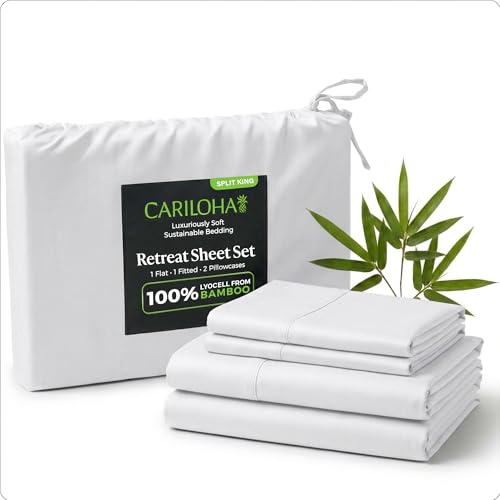
Luxuriously Soft Fabric: Cariloha Retreat Sheets are crafted from lyocell material with a premium sateen weave, offering an ultra-soft, silky feel. These sheets provide a luxurious sleep experience, combining comfort and elegance.
Frequently Asked Questions
Is Bamboo or Tencel Better for Hot Sleepers?
In the quest for a serene slumber, Tencel outshines bamboo with superior breathability and moisture-wicking properties, offering lower heat retention and enhanced softness. Its durability and hypoallergenic benefits further bolster Tencel’s appeal amidst a cost-conscious analysis.
Is Bamboo Cotton Good for Sleeping?
Bamboo cotton is good for sleeping, offering bamboo softness, cooling properties, and moisture absorption benefits. Its hypoallergenic nature makes it an eco-friendly choice, although durability concerns and care instructions may affect overall comfort level and price comparison.
What Is the Healthiest Fabric to Sleep On?
The healthiest fabric for sleep is organic cotton, offering superior temperature regulation and moisture-wicking properties. Its allergen resistance enhances sleep comfort while ensuring fabric breathability, making it ideal for those with skin sensitivity compared to less eco-friendly materials.
What Is the Downside of Bamboo Fabric?
Bamboo fabric offers ephemeral softness but may wrinkle easily, complicating maintenance. Its durability remains uncertain, while chemical production raises eco-friendly concerns. Though versatile and hypoallergenic, it might fall short in temperature regulation compared to alternatives.