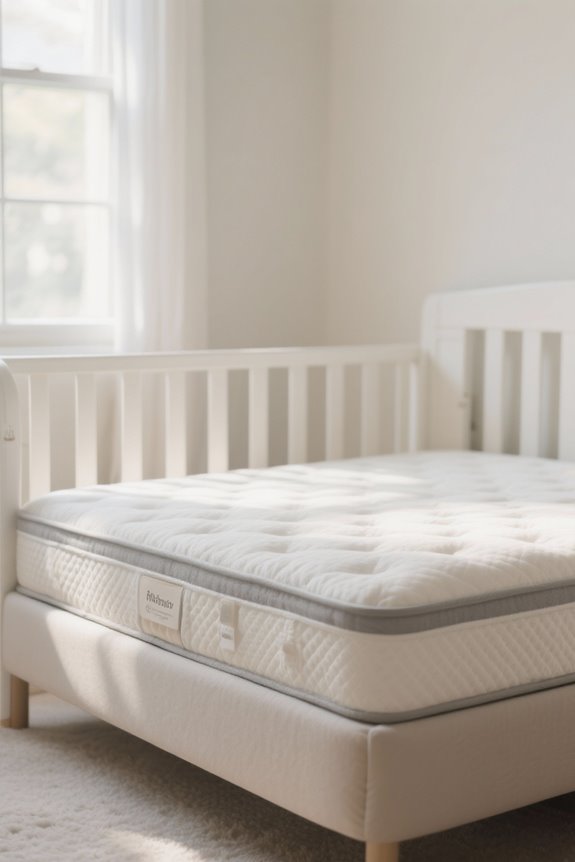

Crib mattresses must focus on breathability, firmness, and safety standards. Choose breathable options to enhance airflow. Firmness should be rated 8–10 for infant safety, reducing the risk of SIDS. Confirm mattresses comply with ASTM and CPSC safety regulations. Look for GOTS and GREENGUARD certifications for materials. Select models with removable, washable covers for hygiene and easy maintenance. Protect against spills with waterproof layers. Understanding these factors will help in selecting the best mattress for your infant.
Key Takeaways
- Breathable crib mattresses enhance airflow, reducing suffocation risks, especially for infants who sleep face down.
- A firmness rating between 8–10 is crucial to prevent SIDS and ensure proper spinal alignment for infants.
- Compliance with ASTM F2933 standards and CPSC regulations ensures mattress safety, flammability, and appropriate dimensions to prevent wedging hazards.
- Look for certifications like GOTS and GREENGUARD Gold for health and environmental assurance in breathable mattresses.
- Removable, machine-washable covers promote hygiene and easy cleaning, contributing to a safer sleep environment.
Understanding Breathability in Crib Mattresses
Breathable mattresses enhance airflow, vital for reducing suffocation risks in infants. Manufacturers utilize materials like organic cotton or mesh to facilitate easier breathing, especially for babies who may sleep face-down. Not all mattresses marketed as breathable meet safety standards, underscoring the significance of independent certification and airflow testing. Look for mattresses that comply with ASTM standards, which help confirm safety and clarity in product claims. Additionally, features like removable and washable covers contribute to hygiene, promoting a safer sleep environment. Selecting a firm, breathable mattress is essential for infant safety, as it balances comfort with necessary airflow. Prioritize certification from reputable agencies to assure quality and safety in your choice. GREENGUARD Gold certification ensures low chemical emissions and compliance with safety standards, crucial for your child’s health and indoor air quality.
Importance of Firmness for Infant Safety
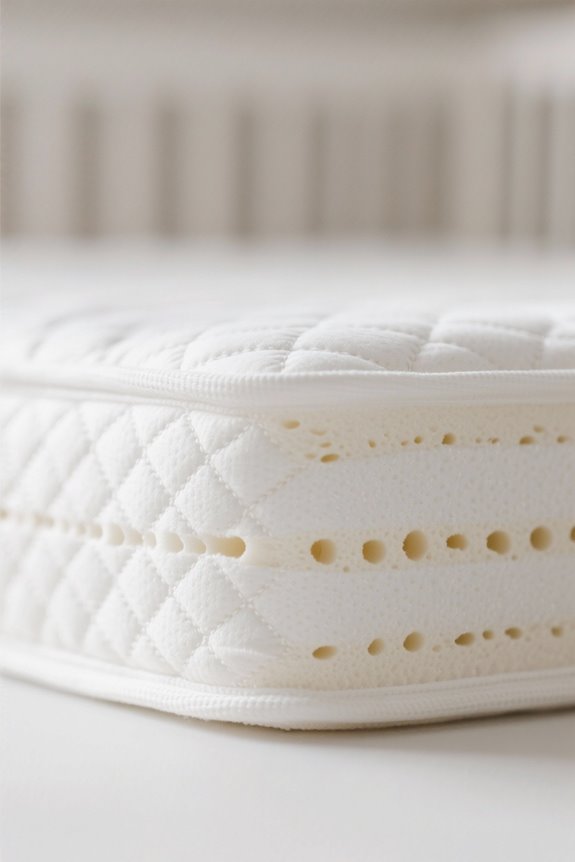
Firmness is a critical factor in selecting a crib mattress for infants. A firmness rating between 8–10 on the firmness scale is recommended to reduce the risk of Sudden Infant Death Syndrome (SIDS) and suffocation. Firm crib mattresses are essential for supporting infant spinal alignment, keeping them flat without visible sagging. The Consumer Product Safety Commission (CPSC) requires rigorous firmness testing to guarantee mattresses resist indentation when a baby lies down. Follow these guidelines to create a safe sleep environment: choose a mattress that remains firm under compression and aligns with safety standards. Prioritize infant safety over adult comfort by selecting high-quality crib mattresses that maintain firmness for restful, secure sleep. Selecting a bed rail assist is equally important for adults, as it offers crucial support and enhances independence at home.
Safety Standards Compliance for Crib Mattresses

To guarantee infant safety, crib mattresses must adhere to established safety standards. Crib mattresses must meet ASTM F2933 standards, which guarantee appropriate firmness and performance. Compliance with Consumer Product Safety regulations is mandatory, including flammability standards outlined in 16 CFR 1633, which prohibit harmful flame retardants. Proper sizing is essential; standard crib mattresses should measure approximately 51⅝ x 27¼ inches to prevent potential wedging. Additionally, manufacturers must secure Children’s Product Certificates (CPC), confirming adherence to safety regulations specified in “16 CFR part 1241 – Crib mattresses.” Permanent labeling on the mattress must include the manufacturer’s name, model number, and date of manufacture to facilitate tracking. This guarantees safety and compliance for all infant and toddler sleeping environments. When choosing a mattress encasement, consider hypoallergenic, waterproof materials to enhance comfort and quality of sleep.
Evaluating Breathable Crib Mattress Options

Breathable crib mattresses are essential for infant safety and comfort. When evaluating options, prioritize airflow to lower suffocation risks, especially in face-down sleepers. Look for mattresses with recognized safety certifications, such as GOTS and GREENGUARD Gold, indicating they meet health and environmental standards. Ascertain the model has removable covers for easy washing and maintenance. Check that the mattress complies with CPSC and ASTM firmness standards for infant safety. Additionally, select options made from organic materials, as this contributes to a healthier sleep environment while reducing allergens. Not all breathable mattresses provide adequate ventilation, so thorough research is necessary to guarantee both airflow and firmness. For optimal infant health, consider choosing crib mattresses with hypoallergenic and waterproof features that protect against moisture and allergens. Make informed choices for your child’s safety and well-being.
The Role of Materials in Mattress Firmness
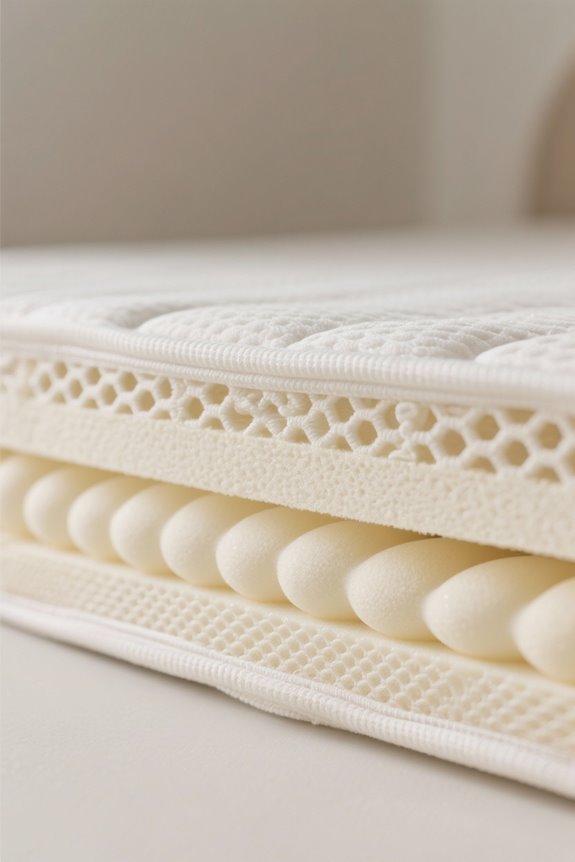
Selecting suitable materials plays an essential role in guaranteeing the firmness of a crib mattress. Innerspring crib mattresses with 135-150 coils provide ideal firmness for infant safety. Look for firmness ratings of 8–10 to meet safety standards. Avoid memory foam, as it can conform to the body, increasing suffocation risks. Opt for natural materials like latex, coconut coir, and organic cotton or wool blends for both firmness and safety. These materials offer exceptional compression resistance, vital for preventing sinking. The American Academy of Pediatrics emphasizes the importance of a firm sleeping surface to reduce the risk of SIDS. Choose certified organic materials to guarantee non-toxic sleep surfaces, enhancing both the mattress’s firmness and the safety of the infant. When selecting mattress protectors, consider options that offer allergen protection to promote a healthier sleep environment.
Hygiene Features for a Safer Sleep Environment
Maintaining proper hygiene in a crib mattress is essential for guaranteeing a safe sleep environment. Choose mattresses with hygiene features like removable covers for easy cleaning. Select machine-washable surfaces to reduce bacteria and pathogens efficiently. Make certain waterproof layers protect the mattress core from spills, preventing harmful mold and bacterial growth. Look for products with GOTS certification, which guarantees organic materials free from harmful chemicals. Prioritize high air permeability and low CO2 retention to reduce suffocation risks. Invest in breathable mattresses designed to enhance airflow. Finally, opt for antimicrobial materials to further promote a hygienic environment. Regular cleaning and maintenance are vital to prolong the mattress’s life while guaranteeing a safe sleep area for infants. Consider using a waterproof TPU backing to prevent fluid leakage while maintaining a quiet sleep environment.
Frequently Asked Questions
What Crib Mattress Firmness Is Safest?
Firmness guidelines indicate a crib mattress should rank 8-10 for ideal infant sleep safety. Prioritizing proper mattress material, breathable design, and adhering to crib mattress standards enhances SIDS prevention, ensuring a safe sleep environment.
Are Breathable Crib Mattresses Safer?
Breathable crib mattresses offer several safety benefits, including enhanced temperature regulation and improved sleep quality. However, parents should consider mattress materials and safety certifications while remaining mindful of potential health implications highlighted in sleep studies regarding infant safety.
What Is the Most Breathable Crib Mattress?
The most breathable crib mattresses feature breathable materials and innovative mattress construction for maximum airflow design. They utilize natural fibers, specialized foam types, and breathable mattress covers to guarantee a safe sleep environment while preventing overheating for babies.
How to Tell if a Crib Mattress Is Breathable?
To determine a crib mattress’s breathability, one must examine mattress construction, breathable materials, and airflow technology. Safety certifications and consumer reviews enhance confidence, while hypoallergenic options promote temperature regulation for improved infant sleeping and overall sleep quality.