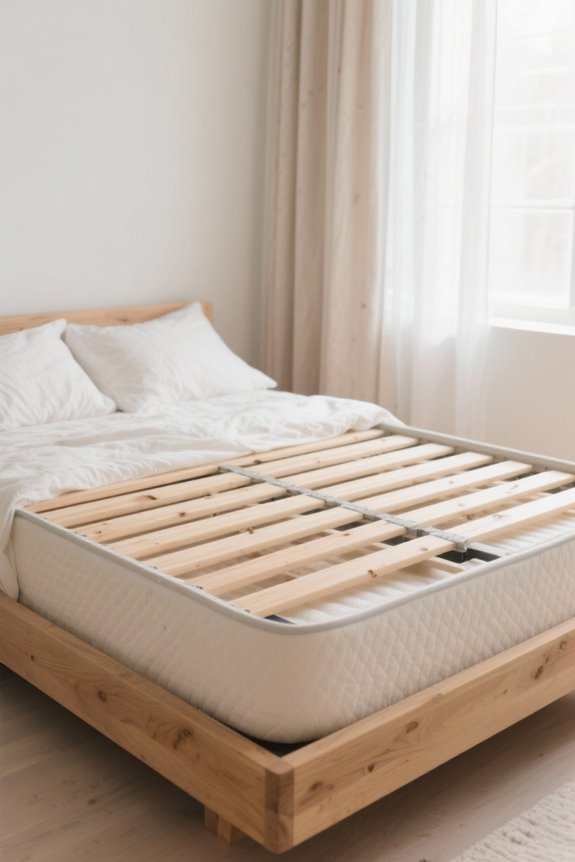
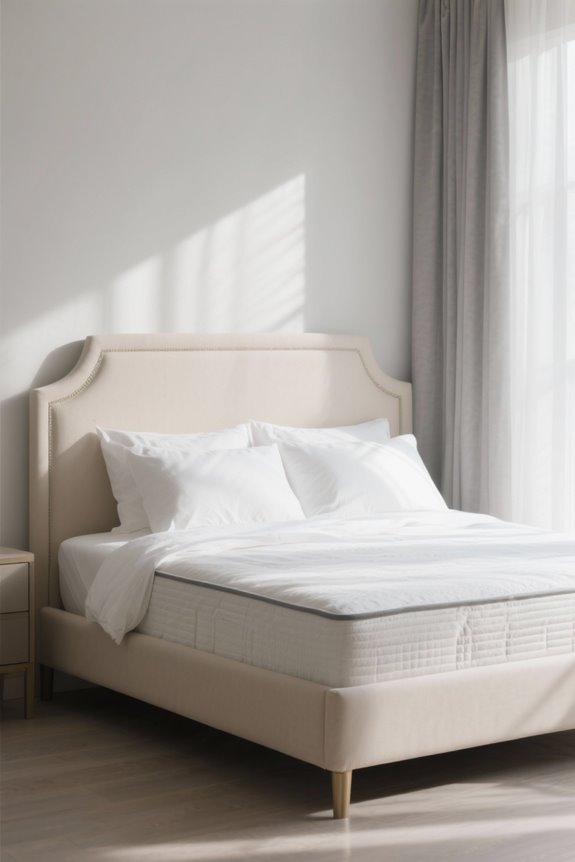
A box spring provides essential support for innerspring mattresses and helps extend their lifespan. It typically measures between nine and sixteen inches in height. However, memory foam or latex mattresses do not require a box spring, as they need a solid foundation. Alternatives include platform beds, adjustable bases, and bunkie boards. Box springs can last around ten years, so replace them if they sag or make noise. Discover more about mattress compatibility and other options available.
Key Takeaways
- Box springs provide essential support for innerspring mattresses, enhancing durability and sleep quality.
- Memory foam and latex mattresses do not require box springs and thrive on solid bases.
- Alternatives like platform beds and adjustable frames offer versatile support without the need for box springs.
- Box springs improve airflow under mattresses, promoting a cooler sleeping environment.
- Consider manufacturer guidelines to ensure proper compatibility between your mattress and support foundation.
What Is a Box Spring?
A box spring is a foundational support system for mattresses. Typically consisting of a wooden or metal frame with springs, it enhances mattress longevity. This structure absorbs movement, effectively reducing wear and tear on the mattress. Traditional box springs come in various heights, generally around nine to sixteen inches, to accommodate different bed setups. They improve air circulation beneath the mattress, creating a cooler sleep environment. While ideal for innerspring mattresses, box springs are not suitable for all-foam or latex mattresses, which require a more rigid support to maintain their effectiveness. Understanding the role of a box spring helps in selecting the right foundation for your mattress and promoting lasting comfort. For those seeking modern alternatives, heavy-duty metal bed frames provide ample support without the need for a box spring.
Do You Really Need a Box Spring?
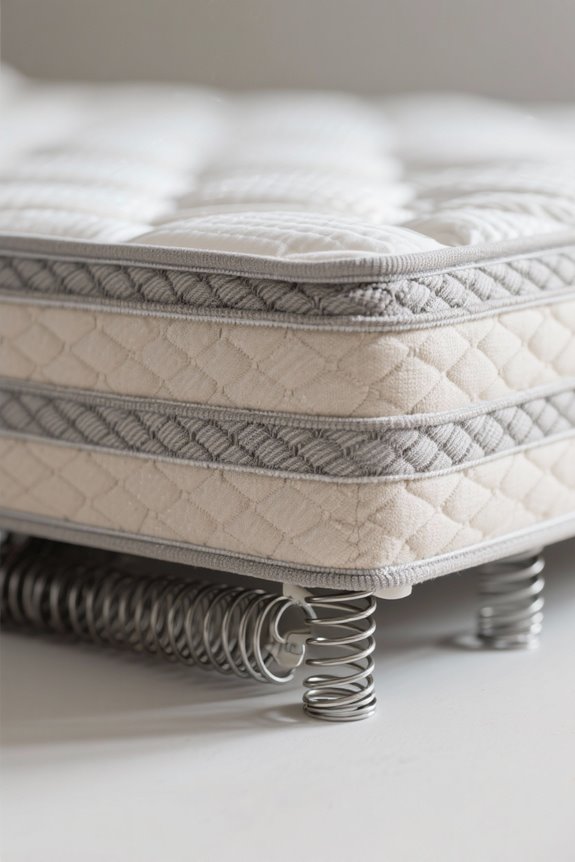
Choosing whether to use a box spring depends considerably on the type of mattress one owns. Traditional innerspring mattresses typically require a box spring for adequate support, as this can enhance durability and comfort. Non-innerspring mattresses, including memory foam and latex, usually do not necessitate a box spring. It’s essential to check what the mattress warranty requires for support; it may specify certain foundations. Consider the pros and cons of using a box spring versus alternatives such as platform beds or adjustable bases. These modern mattress foundations can effectively support your mattress needs and provide enhanced comfort. Ultimately, individual preferences for mattress height and overall comfort will guide your decision on whether to include a box spring.
Types of Compatible Mattresses

Various types of mattresses have specific compatibility with box springs and alternative foundations. Innerspring mattresses generally pair well with box springs, utilizing the shock absorption and support they provide. Memory foam mattresses require a solid foundation to prevent sagging and maintain their structural integrity. Likewise, latex mattresses thrive on firm, breathable bases, making them unsuitable for traditional box springs. Hybrid mattresses offer versatility; they may work with either box springs or a solid foundation, depending on their design and manufacturer guidelines. Some hybrid mattresses, such as those with individually wrapped pocket springs, are designed to minimize motion transfer and may benefit from a specific type of foundation to maximize this feature. Always consult these guidelines to guarantee proper mattress compatibility based on specific support needs. Understanding these relationships can enhance mattress performance and prolong lifespan, providing ideal comfort and support for the user.
Pros and Cons of Box Springs
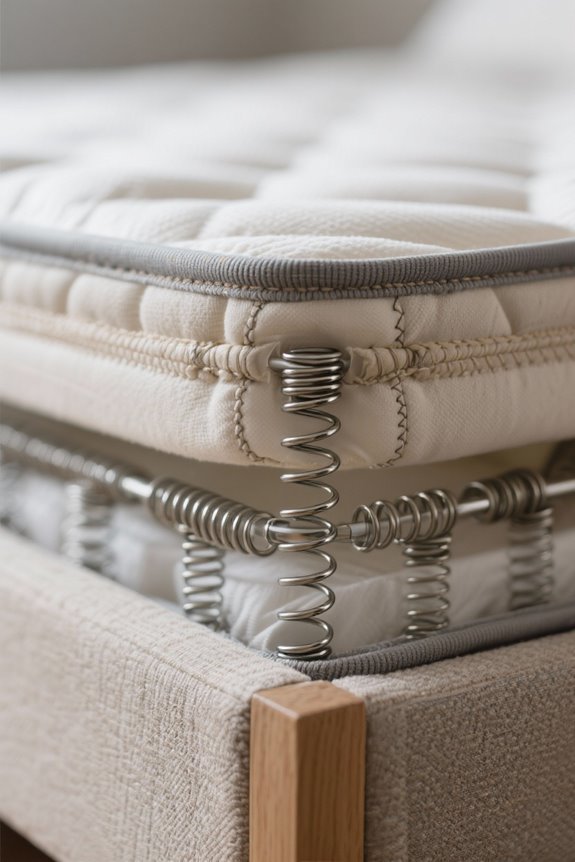
When considering box springs, it’s important to weigh their advantages and disadvantages. Box springs provide essential mattress support, particularly for innerspring mattresses. They enhance durability and shock absorption, minimizing wear and tear, while also facilitating air circulation beneath the mattress. This helps create a cooler sleeping environment. Elevating the mattress makes getting in and out of bed easier, especially for those who prefer a higher surface. However, they are generally incompatible with foam and hybrid mattresses, which require a solid base for ideal support. Additionally, box springs have an average lifespan of around 10 years, after which they may sag or become noisy, necessitating replacement. Consider the pros and cons closely before deciding if a box spring is right for you. A luxurious 600 thread count pillowcase set can accompany your bed setup to enhance comfort and provide a hotel-like feel.
Common Alternatives to Box Springs

As consumers explore options for mattress support, several alternatives to box springs become evident. Platform beds offer solid bases that eliminate the need for a box spring, supporting foam mattresses effectively. Adjustable bed frames provide customizable sleeping positions and do not require box springs due to their own structural integrity. Bunkie boards are thin, flat boards that deliver solid support, ideal for low-profile beds and compact spaces. Metal bed frames present a straightforward and stable foundation for mattresses, ranging from basic to more elaborate designs. Each of these modern alternatives serves as an excellent way to guarantee proper mattress support without relying on traditional box springs, meeting various aesthetic and functional preferences for today’s users. Mid-century platform beds showcase clean lines and solid wood constructions, offering both style and space efficiency with features like under-bed storage.
Factors Influencing Your Choice
What factors should one consider when deciding on a box spring? First, evaluate your mattress types. Innerspring mattresses often benefit from a box spring for support, while memory foam performs better on solid surfaces. Next, assess your bed frame. Traditional frames usually need box springs for stability, whereas platform beds or adjustable frames may not. Consider your height preference; box springs raise mattress height, facilitating easy access. Examine the manufacturer’s specifications regarding support requirements, as this directly impacts sleep quality. Finally, weigh the pros and cons of using a box spring, such as added height and motion absorption against compatibility issues with non-innerspring mattresses. Durability is also crucial, as box springs can affect the overall lifespan of your bedding. Additionally, consider the eco-friendly considerations of your bedding choice, as sustainable materials can minimize your environmental impact.
When to Replace Your Box Spring
Box springs require replacement approximately every 10 years to maintain mattress support. Look for clear signs indicating it’s time to replace your box spring. Check for visible sagging, broken slats, or persistent creaking noises. These issues directly affect the stability and support your mattress needs. If using a heavier mattress type, make sure the box spring provides sufficient support. Consider replacing the box spring when you replace your mattress to avoid premature wear. Additionally, monitor for reduced motion isolation, which can lead to sleep disruption and diminished quality. Regular assessments of these factors will help maintain a comfortable sleep environment and prolong the life of your mattress. Take action promptly when issues arise to guarantee peak performance. Remember, having a durable tear-resistant material in your box spring can significantly enhance its longevity and effectiveness, much like the high-quality fabrics used in hammock camping gear.
Frequently Asked Questions
Are Box Springs Necessary Anymore?
“Out with the old, in with the new.” Box springs are increasingly unnecessary, as modern mattress support options like platform beds and adjustable frames provide better sleep setups, enhancing comfort and sleep quality while complementing contemporary bedroom design.
Is It Bad to Just Have a Mattress Without a Box Spring?
Using a mattress without a box spring can provide adequate mattress support, improve sleeping comfort, and enhance airflow. However, it may lower bed height and affect design aesthetics, influencing mattress longevity and weight distribution in modern furniture.
Do Modern Beds Need a Box Spring?
Modern beds typically do not require a box spring, as innovative sleep solutions like platform beds offer adequate mattress support. This enhances sleeping surface benefits, mattress longevity, bedroom aesthetics, and aligns with personal preferences and cost considerations.
What Are People Using Instead of Box Springs?
In a revolutionary departure from tradition, modern sleepers now embrace platform beds, adjustable bases, and minimalist bed frames, utilizing slatted foundations, foam support, and hybrid solutions, transforming sleep technology with stylish mattress toppers and solid foundations.