

Accurate measurements are essential for bed frames and headboards to fit mattresses and box springs properly. Measure the specific mattress dimensions and add 1.5 inches to both length and width for internal frame dimensions. Allow an additional ½ to 1 inch for easier access. Check for gaps and utilize spacers to maintain alignment. Regularly assess the fit to enhance aesthetics and functionality. Proceed to discover more tips for ensuring the perfect fit and improved user experience.
Key Takeaways
- Measure your mattress and box spring dimensions accurately for a perfect bed frame fit.
- Add 1.5 inches to both length and width of the mattress for internal frame dimensions.
- Maintain ½ to 1 inch of space around the mattress to prevent shifting and ease access.
- Incorporate spacers to keep the box spring centered and minimize alignment issues.
- Regularly check alignment to prevent gaps that detract from the frame’s aesthetics and functionality.
Importance of Accurate Internal Dimensions
Accurate internal dimensions for a bed frame are essential, as they determine how well a mattress fits. A standard king mattress measures 76 x 80 inches. It is advisable to add an extra 1.5 inches to each dimension. This allowance accommodates variations between mattress manufacturers. Ascertain the frame provides ½ to 1 inch of extra space. This prevents shifting of box springs and aligns the mattress correctly. Additionally, consider frame materials and design styles. The choice can impact both functionality and aesthetics. Measure the actual mattress before building the frame. This practice allows bed skirts and sheets to fit properly. With precise dimensions, bedroom setups become easily manageable and visually appealing. Maintain these guidelines for ideal bed frame construction. When selecting pillows for your bed, consider ergonomic support features to enhance comfort and ensure restful sleep.
Understanding Mattress Variability
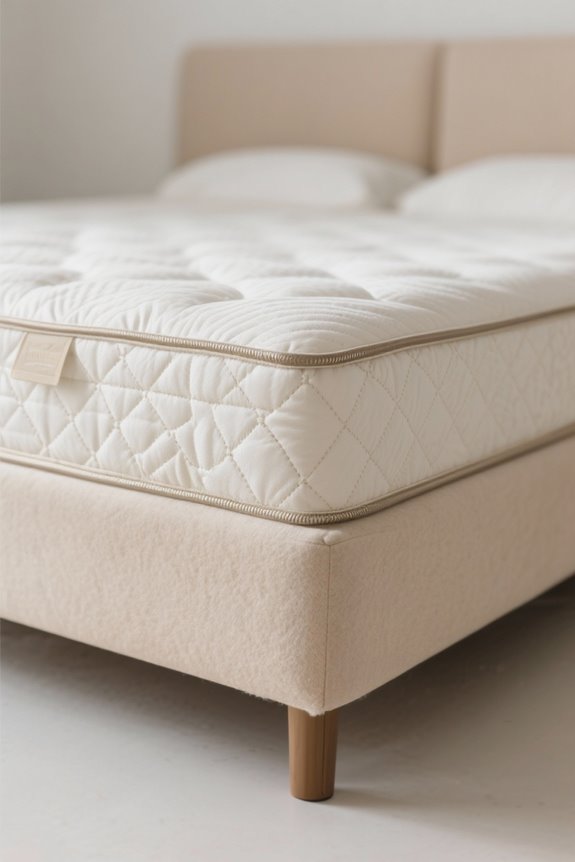
When selecting a mattress, understanding its variability is essential for guaranteeing a proper fit in the bed frame. Mattress types vary greatly among manufacturers, leading to discrepancies in actual sizes. For instance, some twin XL mattresses might be narrower than the standard dimensions of 38 x 80 inches. Always measure your specific mattress before constructing the frame to avoid fitting issues. Note that nominal dimensions may not represent the true size. To secure accuracy, gather measurements from retailers and consider manufacturer specifications. It is advisable to have your mattress on hand before beginning frame construction. This practice helps accommodate any discrepancies and guarantees your bed frame will be built for a precise fit with your chosen mattress. Consider the importance of hypoallergenic, waterproof materials when choosing a mattress encasement to enhance comfort and improve the quality of sleep.
Factors for Fit and Usability
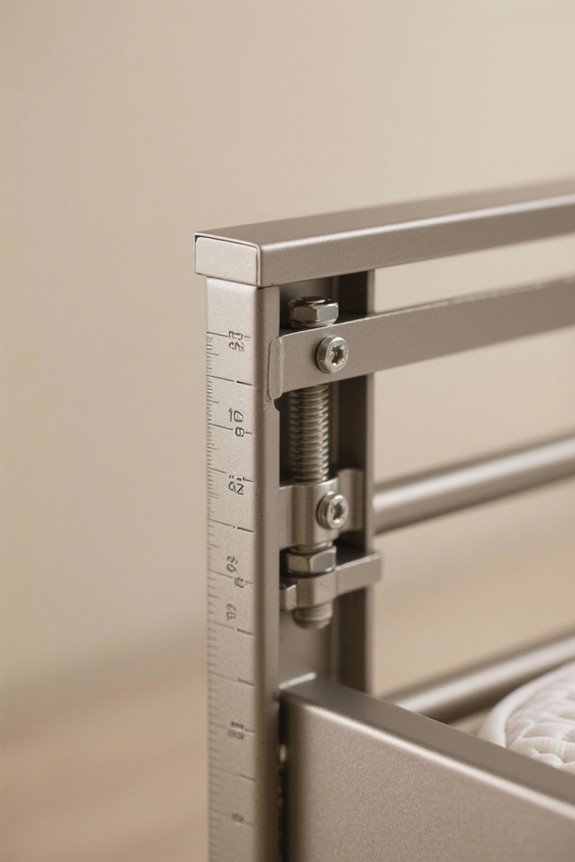
Making sure the right fit between a bed frame and mattress is essential for usability. Add approximately 1.5 inches to standard mattress dimensions for a proper fit. A tighter fit complicates tasks like making the bed, especially if the frame lacks flexibility. Consider leaving ½ to 1 inch of space in each dimension for easier access. For various mattress types, the frame should accommodate the specific dimensions to avoid gaps. When constructing a bed frame from different frame materials, measure the actual size of the mattress and box spring. This consideration prevents shifting and maintains stability. Adjusting the frame’s width and using spacers can also improve alignment and usability. Always prioritize accurate measurements for best results. Many modern bed frames come with built-in charging stations that enhance user experience by providing convenient access to power sources for electronic devices.
Recommended Products
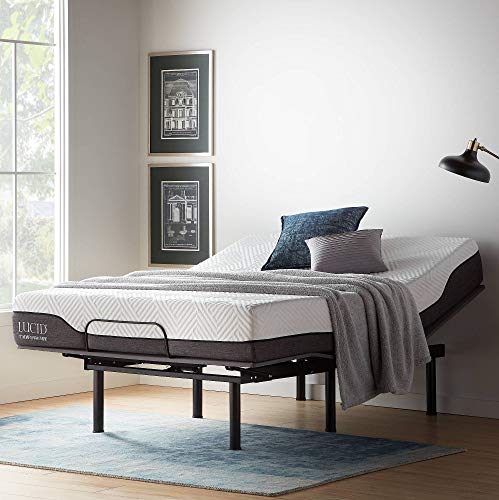
COMFORT BENEFITS: Adjustable bases makes it easy to relax at night, read in bed, watch TV, or work from home

Vehicle Compatibility: The Ride Rite Air Spring Kit fits 2024-2026 Tacoma 4WD

Vehicle Compatibility: The Ride Rite Air Spring Kit fits 2015-2026 F150; not Raptor; requires 8" of frame to tire clearance; will not fit models with the self leveling headlight or scale optioned trucks; see 2627 for those applications; In-Bed Hitch is not compatible
Managing Alignment Issues

Managing alignment issues is essential for maintaining a tidy and functional sleep space. A shifting box spring often results in visually unappealing gaps, typically around 2 inches, between the mattress and the frame. For effective shifting prevention, it is advisable to build a slightly wider bed frame. This design allows for stable positioning of the box spring. Incorporating spacers can also help keep the box spring centered. Regularly check bed alignment to guarantee a snug fit around the foundational pieces, which promotes gap reduction. A well-aligned setup not only enhances the room’s appearance but also improves ease of access when getting in and out of bed. Maintaining proper alignment can greatly enhance the overall sleep experience. Implementing adjustable height features in bed support legs ensures compatibility with various bed designs, providing enhanced stability and reducing the risk of frame bending or breaking.
Expert Recommendations for Frame Construction
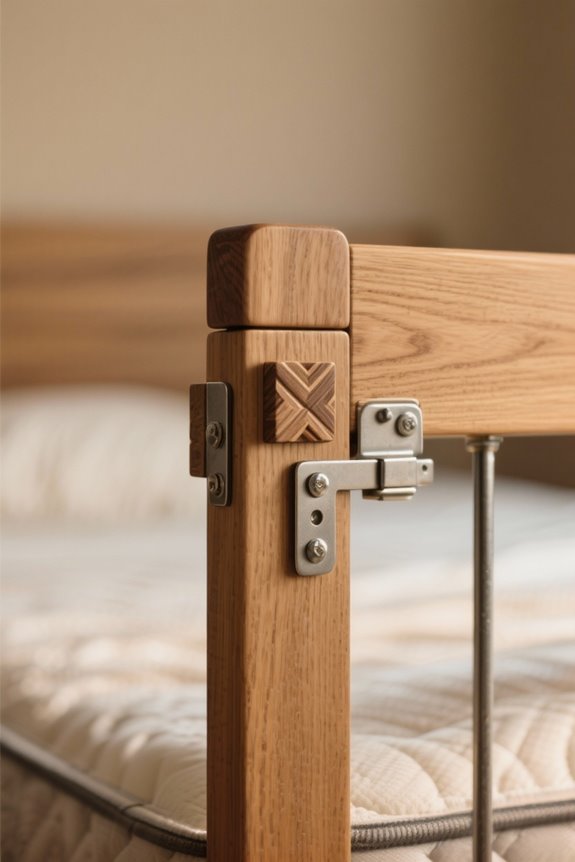
Accurate measurements play a significant role in the construction of a bed frame. First, measure the actual dimensions of the mattress and box spring. Account for any manufacturer variances. Add 1.5 inches to both the length and width of the mattress when planning internal dimensions. This helps accommodate design styles and frame materials. Aim for ½ to 1 inch of extra space for easier bed making and sheet tucking. Secure the mattress before building the frame to avoid alignment issues. Consult mattress retailers for accurate measurements to guarantee a snug fit. For those with split king adjustable beds, consider the depth and flexibility of your sheets, as features like deep pockets can ensure a secure fit on thicker mattresses. This attention to detail in frame construction results in a functional, visually appealing piece that meets bedding needs effectively.
Recommended Products

5 Classic Functions – Elevates the head, knees, and feet, and adjusts bed height from 16" to 30". Supports Trendelenburg, reverse Trendelenburg, Fowler’s, semi‑Fowler’s, high‑Fowler’s, and chair positions with angle displays for precise patient positioning.

Wide Bariatric 5 Classic Functions (42" Width) – Supports Trendelenburg, reverse Trendelenburg, and independent head, knee, and foot elevation. Height adjusts from 20" to 29". Includes battery backup, nursing pad, and built‑in patient control pads on the side rails. Angle‑degree displays ensure precise positioning for patient comfort and safety.

Adjustable Straddle Leg Width: 45.9 - 61.6 inch. 650-watt drive motor, 2,200-watt lift motor. MAX.lifting height: 130”, Fork lowered height: 2.8”. Turning radius 53 inch, aisle width of 87.8 inch. 3300 lbs capacity
Accommodating Bedding Needs
A well-constructed bed frame must meet various bedding needs. Start by adding approximately 1.5 inches to each dimension of the mattress. This extra space facilitates ease of use and bedding application. Measuring the mattress beforehand is essential due to size variations between manufacturers. Include an additional ½ to 1 inch for a snug fit, especially with a box spring. A well-fitted frame aids in tucking in sheets, enhancing functionality. Consider the need for bed skirts and various bedding styles. This helps maintain a neat appearance and prevents gaps. Building the frame slightly wider may allow for better alignment of the box spring. Use spacers if necessary to guarantee stability and support for different sheet options.
Recommended Products

Vehicle Compatibility: This Air Suspension Kit is compatible with 2007-2018 Silverado/Sierra 1500HD w/o MagneRide or 97.6" Truck Beds

2-in-1 Space-Saving Metal Bed: The bunk loft bed features a pull-out lower bed that transforms your space effortlessly. Tucked away, it serves as a compact single bed or a cozy seating area; fully extended, it becomes a spacious queen-size bed, making it great for small bedrooms, multi-child households, and guest accommodations

Trekstep has one job: Make that step up into the bed from the rear corner more convenient and stable
Measuring Your Mattress
Measuring your mattress accurately is essential for a proper bed frame fit. Begin by measuring the length and width of your mattress, noting standard king dimensions at 76 x 80 inches. Add 1.5 inches to each measurement to guarantee easy bedding use. Also, check the mattress thickness, as proper height will affect your frame design. Remember that sizes can vary slightly by manufacturer, so always gather specific measurements from your retailer. A snug fit complicates bed-making, so allow for a ½ to 1 inch of space. If using a box spring, consider a slightly wider frame material, or use spacers to minimize visual gaps and keep everything centered. This attention to detail guarantees a secure and comfortable fit. Additionally, under-bed storage options can be a practical consideration when choosing a bed frame, ensuring efficient use of space in your bedroom.
Recommended Products

Unmatched Comfort & Adjustability: Elevate your sleeping experience with our head (up to 75°) and foot (up to 45°) lift mechanism, allowing for perfect positioning. The unique headboard hugger ensures you stay close to your nightstand, while the additional head (pillow) tilting provides personalized comfort. Lumbar support ensures your spine is well-supported throughout the night.

Unmatched Comfort & Adjustability: Elevate your sleeping experience with our head (up to 75°) and foot (up to 45°) lift mechanism, allowing for perfect positioning. The additional head (pillow) tilting feature provides personalized comfort. By adjusting your sleeping position to the ideal angle, you can benefit from clearer airways, decreased congestion, lessened snoring, and better spinal alignment to ease back pain.

Unmatched Comfort & Adjustability: Elevate your sleeping experience with our head (up to 75°) and foot (up to 45°) lift mechanism, allowing for perfect positioning. By adjusting your sleeping position to the ideal angle, you can benefit from clearer airways, decreased congestion, lessened snoring, and better spinal alignment to ease back pain.
Customizing Dimensions for User Experience
Customizing bed frame dimensions enhances user experience considerably. To maximize user comfort, add 1.5 inches to the length and width of a king mattress. This adjustment simplifies bedding adjustments. Always measure your mattress beforehand to guarantee compatibility with the bed frame. Leave an extra ½ inch to 1 inch in the pocket dimensions for easier sheet changes. Construct a slightly wider frame to accommodate box springs and prevent alignment issues. This design versatility helps avoid unattractive gaps. Secure the mattress before building the frame for a snug fit. Gather precise dimensions from mattress retailers as necessary. Following these guidelines will enhance functionality and create a more enjoyable sleeping environment for users. When selecting bed accessories, consider hypoallergenic options to ensure comfort and minimize skin irritation.
Recommended Products
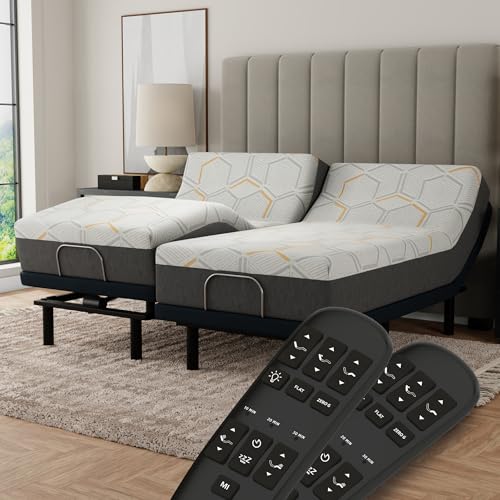
[ADJUST THE WAY YOU SLEEP] This Adjustable Bed Frame and Mattress Set Includes the Adjustable Bases with Independent Head and Foot Movements Allowing You to Customize Your Sleep Position. Also included is Our Medium Firm 12" Copper Cool Gel Infused Premium Memory Foam Mattresses

Unmatched Comfort & Adjustability: Elevate your sleeping experience with our head (up to 75°) and foot (up to 45°) lift mechanism, allowing for perfect positioning. The additional head (pillow) tilting feature provides even more personalized comfort. Lumbar support ensures your spine is well-supported throughout the night.

This set includes our e4 adjustable bed base and our 12" Copper Infused Medium Firm Memory Foam Mattress.
Visual Aesthetics in Bed Frame Design
Visual aesthetics greatly impact the overall appeal of bed frame design. Aim for design symmetry by ensuring bed frames have slightly wider pockets. This can prevent shifting of box springs, enhancing visual alignment. A gap of around 2 inches can create misalignment, disrupting the aesthetic flow. Incorporate spacers into the bed frame design to help keep the box spring centered. This small addition can greatly improve visual presentation. For a more cohesive and appealing bed setup, consider using hypoallergenic materials in bed frames and headboards. Take precise measurements for a snug fit, especially when using bed skirts and sheets. These elements contribute to a polished look in any bedroom. Finally, consider user feedback during the design process. This will improve both functionality and aesthetics, resulting in a more cohesive and appealing bed setup.
Frequently Asked Questions
How Much Bigger Should a Bed Frame Be Than a Mattress?
A bed frame should be at least 1.5 inches larger than the mattress dimensions in both length and width to guarantee proper mattress compatibility, allowing for ease of use and preventing shifting of the box spring.
Why Do People No Longer Use Box Springs?
The box spring has become a relic in modern bedrooms, overshadowed by innovative box spring alternatives like slatted bases and platform beds, which offer superior mattress support without the added bulk and difficulty of movement.
What Should the Measurements Be for a Box Spring for Queen Size Bedframe and Mattress?
For ideal mattress compatibility, a box spring designed for a queen bed should ideally measure 60 x 80 inches. Adding 1.5 inches enhances fit, with allowances for slight sizing variations between manufacturers ensuring proper box spring dimensions.
How Do I Know if a Headboard Will Fit My Bed?
Determining a headboard’s fit involves verifying headboard sizes align with bed dimensions. Despite doubts regarding height, comparing the headboard’s height to mattress and box spring measurements guarantees visual harmony and functional support for comfort while seated.