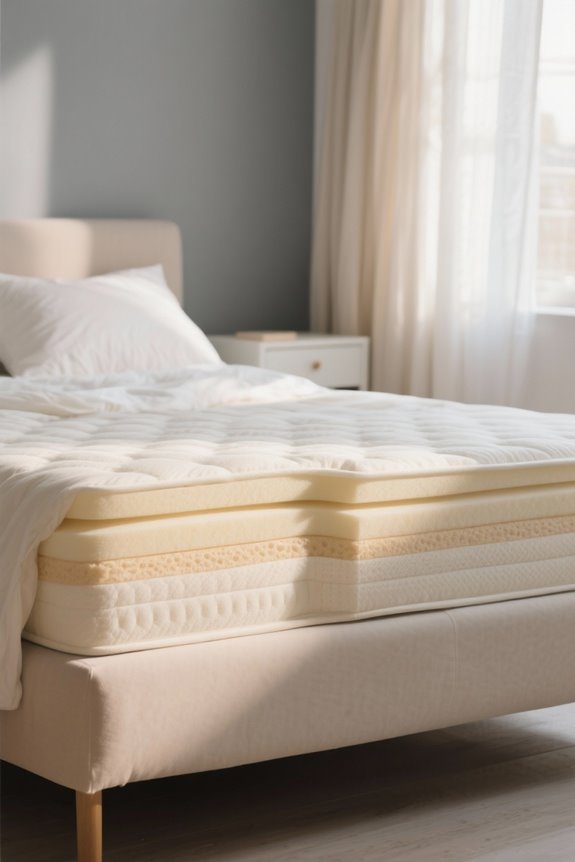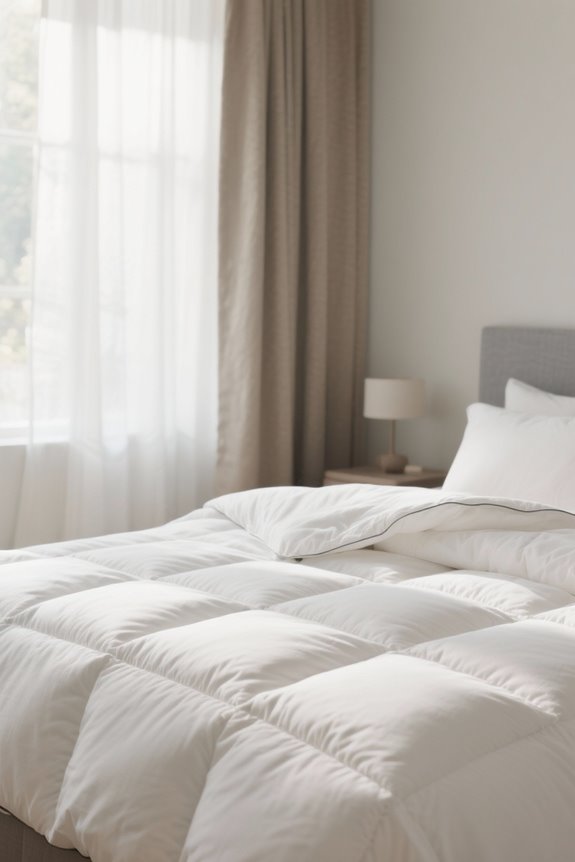

When choosing between down and down alternatives, consider fill power, warmth ratings, and construction methods. Fill power measures down’s loftiness; higher ratings, like 600-800, indicate better insulation. Baffle box construction enhances warmth and prevents cold spots. Alternate methods, such as channel or box stitch, have different impacts on comfort. Evaluate your personal comfort preferences and climate when selecting. Next, explore the benefits of each option to find which suits your needs best.
Key Takeaways
- Down provides natural insulation and warmth, while down alternatives use synthetic materials for a different comfort experience.
- Fill power measures the loftiness of down; higher ratings indicate better quality and thermal efficiency.
- Baffle box construction in down comforters prevents cold spots and improves loft, while sewn-through styles can result in uneven warmth.
- Down alternatives lack fill power ratings but should still be selected based on personal warmth preferences and comfort needs.
- Consider climate when choosing a comforter type, as lighter options suit warm months and heavier options are best for colder weather.
Understanding Down and Down Alternatives
Down and down alternatives offer distinct options for bedding. Down comes from ducks and geese, providing natural insulation. Its ability to trap air leads to great warmth ratings. Many comforters use baffle box construction, creating pockets for even down distribution. This design prevents cold spots and enhances overall comfort. Down alternatives aim to replicate this warmth and loft using synthetic materials, like polyester or microfiber. While they are generally more affordable and easier to care for, they lack a fill power rating, which measures down’s insulating power. Gusseted design offers extra height and support, improving spine alignment, especially for side sleepers. Understanding warmth ratings is important when choosing a comforter, as options vary from lightweight for warm climates to heavy-weight for colder settings. Select based on your personal comfort needs.
What Is Fill Power and Why Does It Matter?

Understanding fill power is essential for selecting a quality comforter. Fill power indicates the loftiness of down, meaning how much space one ounce occupies. Higher fill power ratings, typically between 600 and 800, suggest better quality down. This results in lighter comforters that trap air efficiently and provide warmth and comfort without excess weight. The cubic inches per ounce measurement illustrates that a higher fill power correlates with more expansive volume and superior thermal efficiency. High fill power down offers excellent insulation, ensuring a comfortable sleep experience across various temperatures. When considering down-alternative comforters, also seek out fill power ratings that reflect ideal warmth and comfort for your needs, facilitating informed purchasing decisions. Some down alternative comforters include hypoallergenic properties, making them ideal for allergy sufferers seeking comfortable bedding solutions.
Comparing Baffle Box and Other Construction Methods

When selecting a comforter, the construction method greatly impacts its performance and comfort. Baffle Box construction features three-dimensional pockets, which allow down filling to remain evenly distributed. This design enhances loft and warmth, preventing lumps and cold spots. In contrast, Box Stitch construction connects layers directly, resulting in cooler comforters, as heat escapes easily. Channel construction permits some movement of down filling, providing personalized warmth, but may not retain heat as effectively as Baffle Box. Quilt Stitch uses square pockets to prevent shifting, ensuring a consistently warm feel. Finally, Ring construction allows the most internal movement of down but risks clumping and cold spots over time. Each method has its strengths; choose based on your warmth needs. For those seeking eco-friendly options, consider materials with GOLS certification to ensure high-quality and non-toxic construction.
Warmth Ratings Explained: Finding Your Ideal Comforter
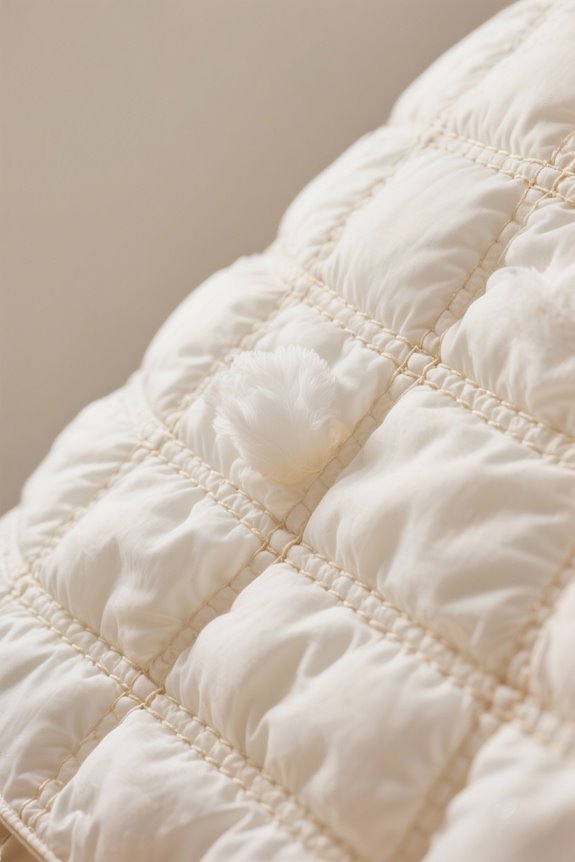
How can one determine the right warmth rating for a comforter? First, consider the fill power. Look for a fill power between 600 and 800 for warmer and lighter options. Next, examine the construction type. Baffle box designs typically provide better loft and insulation capabilities compared to sewn-through styles. Assess your personal temperature preferences: choose ultra-light comforters for warmer climates and heavy-weight models for extreme cold. Review available warmth ratings to find the perfect fit. Additionally, pay attention to the outer shell fabric; its breathability can affect overall warmth. If opting for down-alternative, remember these options usually offer less warmth but can still mimic certain insulation properties. Prioritize your needs to achieve your ideal comforter selection. Consider purchasing comforters that are OEKO-TEX certified, as they ensure materials meet safety and quality standards.
The Benefits of Down Comforters
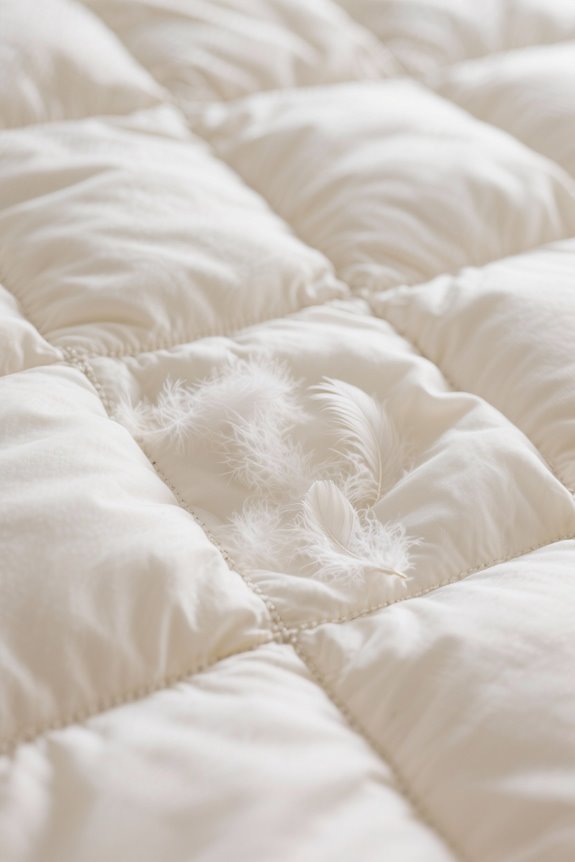
Down comforters offer several key benefits, making them a popular choice for bedding. High-quality down features fill power ranging from 600 to 800, which provides excellent warmth without added weight. The baffle box construction guarantees an even distribution of the down filling, eliminating lumps and cold spots. This design promotes consistent warmth throughout the comforter. Down’s natural insulating properties trap air pockets, adapting to body temperature for a cozy sleeping experience. Unlike synthetic materials, a well-maintained down comforter can last between 10 to 20 years, making it a durable investment. Additionally, many high-quality down comforters are hypoallergenic, suitable for those with sensitivities. Choose down for a reliable and comfortable night’s sleep. To ensure optimal performance and longevity, consider regular maintenance practices like spot cleaning and airing out the duvet frequently.
Exploring Down Alternatives: Pros and Cons
Consider down-alternative comforters as a practical option for bedding. These comforters typically contain synthetic materials like polyester or microfiber, providing warmth similar to natural down. They usually have lower fill power but offer consistent temperature regulation, preventing discomfort from feathers. Many down-alternative comforters are hypoallergenic, making them suitable for individuals with sensitivities. However, their lifespan is shorter, averaging 3-5 years compared to 15-20 years for quality down options. Additionally, the environmental impact of these comforters can be a concern due to their reliance on synthetic fibers. Some brands are addressing this by using recycled materials. In addition to comforters, down alternative mattress pads provide luxurious comfort and are ideal for hot sleepers, enhancing overall sleep quality. Weigh these factors carefully before making a bedding choice that suits your needs.
Allergies and Bedding: Making the Right Choice
Allergies can substantially affect sleep quality. For individuals with sensitivities, choosing the right bedding is essential. Opt for synthetic materials or down alternatives, as these are generally hypoallergenic and resist allergens. High-quality down comforters can also be a suitable choice, but make sure they undergo thorough cleaning processes to minimize allergens. Frequent washing may limit their lifespan, so always follow care instructions. Look for bedding that is Oeko-Tex certified, confirming it is free from harmful substances. Consider options made with recycled materials, balancing comfort and environmental impact. By making informed choices, allergy sufferers can enhance sleep quality while minimizing discomfort from allergens in bedding. For added protection, invest in hypoallergenic pillow protectors which can reduce exposure to dust mites, pollen, and pet dander.
Tips for Choosing the Perfect Comforter for Your Needs
When selecting the ideal comforter, it is essential to prioritize personal comfort and specific needs. First, consider the fill power. A higher fill power, between 600 and 800, indicates superior loft and warmth. Next, choose the construction type; baffle box designs enhance insulation, while sewn-through options are budget-friendly and cooler for sleep. Evaluate the climate and your heat preferences; lighter comforters are ideal for warm months, while heavier options are suitable for cold weather. Check for ethical sourcing certifications like Responsible Down Standard (RDS) or Oeko-Tex for safety. Finally, review maintenance requirements. Down comforters may require professional cleaning every few years, while down alternative comforters allow for easier home care and quicker drying times. Some humidifiers with essential oil trays can complement your comforter choice by adding a soothing aroma to your bedroom, enhancing relaxation and comfort.
Frequently Asked Questions
Is Down Alternative Less Warm Than Down?
Down alternative comforters typically offer less warmth than down, averaging lower insulation performance. With synthetic materials affecting heat retention and breathability factors, these comforters can struggle in colder temperatures while providing better temperature regulation for warmer sleepers.
How Warm Is a 650 Fill Power Down Comforter?
A 650 fill power down comforter offers efficient insulation and adequate warmth for various temperatures, striking a balance between comfort preference and temperature regulation. Warmth comparison indicates it’s suitable for most cold climates without excess weight.
Is 500 or 550 Fill Power Down Better?
When comparing 500 and 550 fill power down, the slight enhancement in warmth retention analysis and comforter weight effects at 550 may suit user preferences better, although costs and filling material differences should also be evaluated.
What Is the Best Material for a Comforter to Keep You Warm?
Natural fibers, particularly high-quality down, excel in heat retention and breathability factors, offering a luxurious comfort layer. However, synthetic fibers provide maintenance ease, serving well in moderate warmth conditions without compromising too much on comfort.