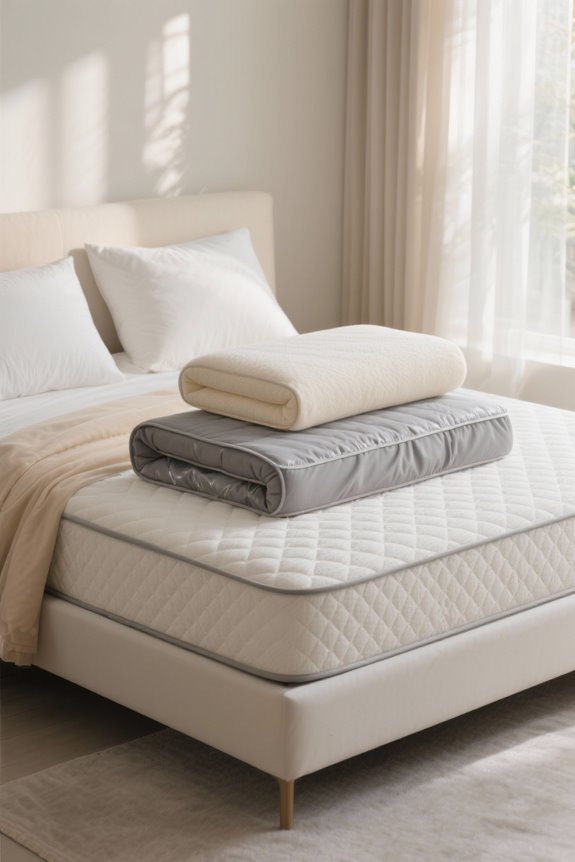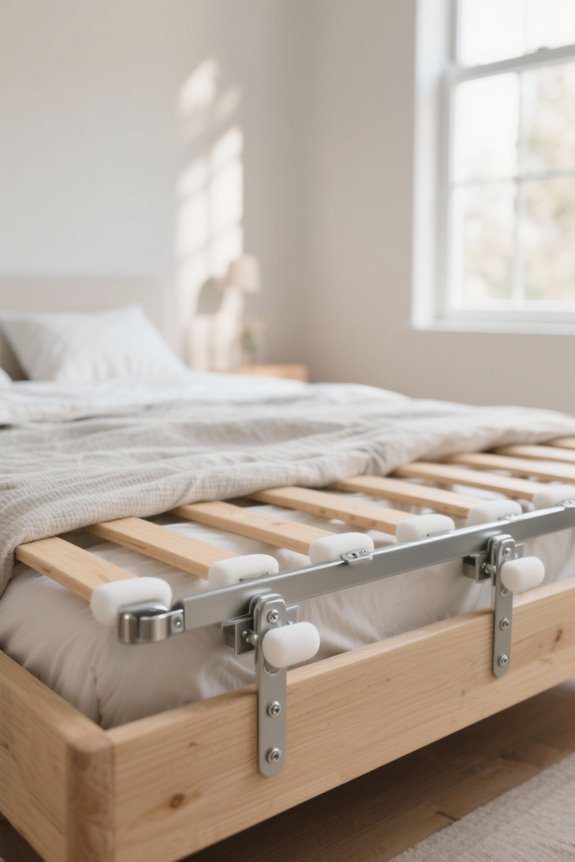

To fix bed noise, guarantee proper slat spacing of 2 to 3 inches. This minimizes sagging and friction. Stabilize your bed frame by checking that all legs touch the floor and adding L brackets for strength. Use rubber anti-squeak pads at joints to absorb movement sound. Regularly inspect the frame every few months, tightening loose screws and applying lubricants like WD-40 to joints. Following these steps will greatly improve your bed’s stability and quietness, with more tips available ahead.
Key Takeaways
- Ensure slat spacing is between 2 to 3 inches to support the mattress and minimize friction that causes noise.
- Add a strong central support system, ensuring all legs touch the floor to prevent wobbling and noise.
- Use L brackets in frame corners for enhanced strength and stability to reduce bed movement and noise.
- Apply anti-squeak pads made from cork or felt at joints to cushion them and absorb vibrations during movement.
- Conduct regular inspections and tighten loose screws and bolts to maintain stability and reduce the likelihood of bed noise.
Understanding the Causes of Bed Noise
Bed noise can disrupt sleep and indicate underlying issues with a bed’s structure. Common culprits include bed squeaks from loose joints and friction between bed slats. To address these problems, regularly inspect the bed frame for instability. Look for loose screws and tighten them to stabilize the bed. Replace or realign worn-out bed slats. Consider using anti-squeak pads made from cork or felt, which cushion joints effectively and reduce noise. Maintenance is essential; check the bed every few months for levelness and support. Monitor for any creaking sounds when shifting positions. By understanding and addressing these causes, one can greatly enhance sleep quality and extend the life of the bed. Adding high-density EVA foam pads can also provide additional shock absorption to minimize bed shaking and related noise, ensuring quieter sleeping environments.
The Importance of Proper Slat Spacing
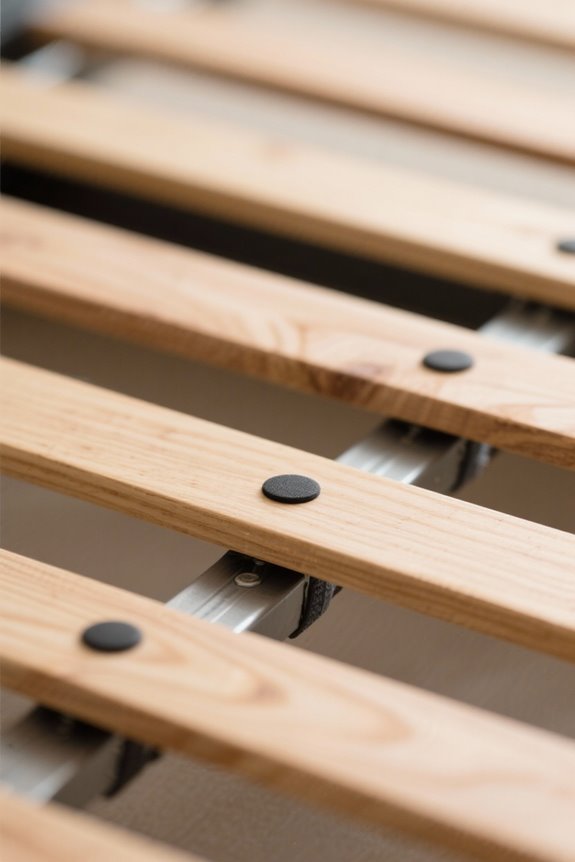
Proper slat spacing plays an important role in the overall support and functionality of a bed frame. Ideally, maintain gaps of 2 to 3 inches between slats for ideal mattress support. This spacing guarantees even pressure distribution, preventing sagging and minimizing wear and tear on the mattress. Inadequate slat spacing increases pressure on specific areas, leading to squeaking noise due to friction. Too wide of a gap may void the mattress warranty, making adherence to guidelines vital. To further stabilize the mattress, consider adding extra slats or reinforcing existing ones. Regularly inspect the integrity and spacing of slats to avoid long-term issues. This proactive approach guarantees a quiet, comfortable sleeping environment, reducing the need for anti-squeak pads. When choosing bed sheets, consider materials like cotton for their breathability and ability to regulate temperature while ensuring comfort and durability.
Recommended Products

MODERN STYLE, EARTH-FRIENDLY WONDERBOX (TM) - Featuring an asymmetrical upholstered headboard, cozy foam padding and muted grey tone, this platform bed is shipped in a box designed to leave a smaller carbon footprint

[Majestic 52" Statement Height] Elevate your sanctuary with our signature 52-inch extra-tall headboard. Designed to create a grand architectural focal point, its impressive height ensures the elegant silhouette remains a visible centerpiece, never hidden behind thick mattresses or oversized pillows.

Unmatched Stability And 900 Lbs Weight Capacity: Say goodbye to the disturbing wobbling experience common in standard metal beds. Our full-size loft bed is engineered with heavy-coated reinforced alloy steel and a high-density slat system, providing a category-leading 900 lbs capacity. Whether for an active teenager or a professional adult, this structurally superior frame ensures absolute peace of mind and a noise-free night's sleep with integrated EVA silence strips. No more worrying about structural integrity; focus on resting in a truly solid sanctuary.
How to Stabilize Your Bed Frame

To guarantee a stable bed frame, begin by establishing a strong central support system. Check that all legs provide adequate contact with the floor to prevent wobbling. Regularly inspect for loose screws and bolts at the joints, tightening them as needed. This maintenance step is essential for stability. Add L brackets to the corners of the frame to enhance strength, especially for lighter materials. If the bed is uneven, use wood shims to achieve a level bed frame. This reduces creaking from weight distribution. Consider incorporating grippy materials, like rubber anti-slip pads, beneath the legs to minimize movement and reduce noise. For any additional supplies, visit a local hardware store for tools and materials. Additionally, consider adjustable height legs to accommodate various bed types and enhance stability.
Recommended Products

⚙ Capable of driving up to 48″ bit (one 12″ bit included).

PREMIUM FABRIC & PET-FRIENDLY ARMRESTS -- Wrapped in breathable, OEKO-TEX certified faux leather, SITJOY combines a supple touch with effortless care. We’ve specifically upgraded the armrest modules with a cat-scratch resistant finish, providing targeted durability against pet claws in high-traffic zones while maintaining cloud-like 3A cotton comfort.

OVERSIZED COMFORT & BONUS PILLOWS: Experience ultimate relaxation with our generously oversized design. Each seat measures a spacious 31"x31", offering expansive seating width and depth for superior comfort. Plus, each sofa comes with 2 versatile pillows – perfect for use as a cozy head pillow when napping or as supportive lumbar cushion when leaning back.
Utilizing Anti-Squeak Pads Effectively
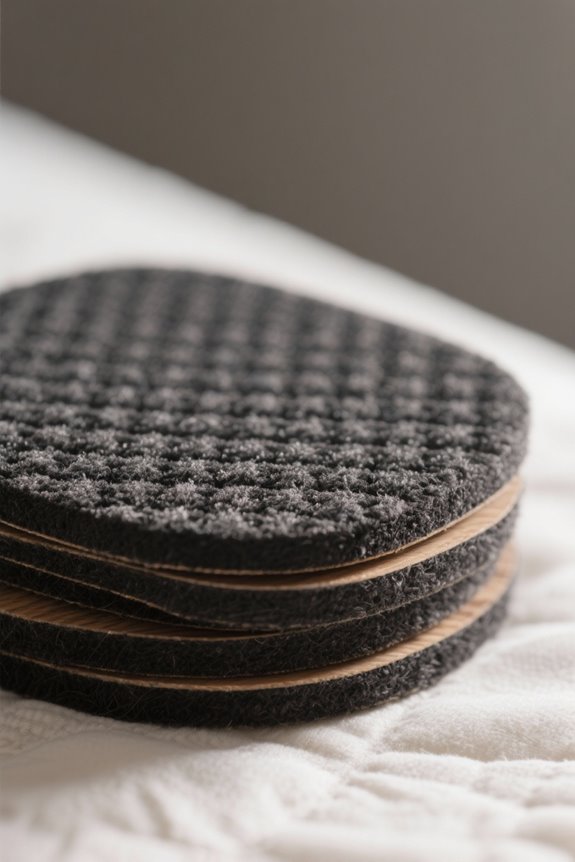
If noise reduction is a priority, utilizing anti-squeak pads is crucial. Place anti-squeak pads, typically made of rubber or felt, between the bed frame and slats. This helps absorb vibrations and reduce noise during movement. Confirm that these pads cover all contact points, including slats, frame edges, and the mattress foundation. This coverage prevents metal parts or wood from rubbing together, which often causes squeaking sounds. Regularly inspect the pads for wear and replace them as needed to maintain their cushioning properties. By doing so, you not only mitigate noise but also enhance the longevity and stability of the bed frame. This proactive approach minimizes wear and tear on components, guaranteeing a quieter sleep environment. Additionally, using a noiseless mattress protector can further enhance your sleeping experience by eliminating crinkling sounds that often accompany traditional covers.
Recommended Products

[Triple Bunk Beds] This L-shaped triple bunk bed features a smart corner design with a Twin XL over Twin XL bunk bed and an attached full loft bed, maximizing vertical and corner space while comfortably sleeping three—ideal for shared bedrooms, large families, or hosting guests.

✨✨【Space-Saving L-Shaped Triple Bunk Bed】This L-shaped bunk bed combines a twin XL over queen bunk bed with an additional loft, creating a smart triple bunk bed design that comfortably sleeps three. Perfect as a bunk bed for 3, it maximizes vertical space, making it ideal for families, shared rooms, or vacation homes needing extra capacity.

3-in-1 Convertible Design: This triple bunk bed offers flexible room layouts for growing families or multi-kid households. Note: Ships in two packages for hassle-free setup. Product does not include mattress
Regular Maintenance for Noise-Free Sleep

Regular maintenance is essential for ensuring a noise-free sleep environment. Regularly inspect the bed frame, joints, and mattress every few months. This helps identify any loose screws or signs of wear. Tighten any loose bolts and screws periodically. Consider using thread-locking adhesive to keep them secure for longer. Apply lubricant like WD-40 or beeswax to joints and slat areas. This reduces squeaking and prolongs the frame’s lifespan. Rotate the mattress and box springs every 3 to 6 months to evenly distribute wear. This prevents specific areas from becoming overly stressed and noisy. Opt for solid colors or attractive patterns that complement existing decor for added style. Finally, use anti-squeak pads between the bed slats and mattress to absorb vibrations and minimize noise transfer during movement. Regular maintenance helps sustain a quiet and restful sleep space.
Identifying and Fixing Loose Joints
A thorough inspection can uncover loose joints, a frequent culprit of bed noise. Start by examining all connection points. Tighten screws and bolts as needed to reduce squeaking. If noise persists, add plastic washers between screws and the frame. These washers enhance stability and prevent future loosening. For more serious issues, consider using lubricants, like WD-40 or beeswax, in areas where joints rub together. Additionally, installing L brackets at corners can greatly improve joint reinforcement. This helps guarantee the bed frame remains sturdy and minimizes noise. Regularly check these joints, as ignoring loose connections can lead to further damage and complicate future repairs. Prompt attention to this issue can enhance your sleep experience. For added stability and to prevent noise, consider using a metal bed frame with reinforced slats and wide legs, which are designed for noise-free sleep and durability.
Lubrication Techniques for Bed Frames
After addressing loose joints, attention should shift to lubrication techniques for bed frames. Proper lubrication is essential to eliminate squeaky noise. Focus on applying lubrication at joints and slat areas where metal bed frame parts rub together. Use solid or paste lubricants like beeswax or candle wax to reduce friction effectively. These options are less messy and more wood-friendly than spray lubricants. Regularly apply lubricant to maintain a quieter environment and prolong the frame’s stability. Aim for an application every few months or whenever noise becomes noticeable. Be precise when applying; only target areas that squeak. These simple lubrication techniques can greatly enhance your sleeping experience and minimize the bothersome noise from your bed frame. Additionally, consider using crib rail covers for a soft and secure fit to protect against wear and tear while maintaining comfort.
Evaluating Mattress Compatibility With Your Frame
Evaluating mattress compatibility with the bed frame is essential for a peaceful sleep environment. First, confirm the mattress and bed frame are the same size. A mismatch causes poor support and may lead to squeaking sounds. Next, check the bed frame’s weight capacity against the mattress type. Heavier mattresses require sturdy frames to prevent noise and wear. Additionally, consider the materials of both the mattress and frame; hybrid and memory foam mattresses pair well with solid platform frames to reduce noise. Verify the slat spacing; slats should not exceed 3 inches apart to provide adequate support. Many bed-in-a-box mattresses arrive compressed, making them easy to transport and set up. Finally, when replacing your mattress, confirm the new design aligns with the frame’s support features, maintaining stability and quiet performance.
Recommended Products

Solid Acacia with Acacia veneer

Cloud-Like Headboard Comfort: Designed with an oversized cloud-inspired headboard, this modern bed frame creates a cozy visual centerpiece while offering soft foam padding for relaxed reading and lounging in your bedroom bed.

[ULTIMATE MULTIFUNCTIONAL DESIGN] This smart bed frame seamlessly integrates massage, storage, and entertainment into a sleek, modern frame. Features include a ergonomic massage chair, speakers, USB charging ports, LED reading lights, and an entertainment console. Available in beige or brown in queen/ king size, it combines luxury with practicality for a transformative bedroom experience
Exploring Options for Soundproofing Your Bed
Many effective methods exist for soundproofing a bed to create a quieter sleeping environment. First, guarantee proper slat spacing; slats should not exceed three inches apart. This arrangement helps prevent mattress sagging and minimizes noise. Next, use anti-squeak pads between slats and the frame to cushion and reduce friction, limiting sound during movement. Reinforce the bed frame with stabilizers like L brackets to increase structural integrity and decrease joint movement. Regularly apply lubricant to joints and slats to maintain quietness. Finally, consider incorporating soundproofing materials such as cork and felt within the slat structure to absorb vibrations, further dampening noise levels. For added relaxation, consider magnesium glycinate supplements which promote better sleep quality and muscle relaxation, enhancing overall comfort and wellness. These steps can considerably enhance bed tranquility and comfort during sleep.
When to Consider a New Bed Frame or Mattress
A persistent bed frame or mattress issue can greatly affect sleep quality. If noise persists despite attempts to tighten loose bolts or add lubricants, consider replacing your bed frame or mattress. Look for a new mattress if you notice sagging, lumpiness, or visible wear. These signs usually indicate diminished support and increased noise. If the box springs cause ongoing squeaks, invest in a solid mattress foundation instead. Upgrade your mattress and frame if they’re older than 7-10 years, as materials degrade over time. For wooden bed frames, choose one with thicker rails and better cross supports to avoid structural problems. A sturdy setup can markedly reduce noise and enhance overall sleep comfort. Consider investing in a reliable waterproof mattress protector to extend the lifespan of your new mattress and maintain cleanliness.
Recommended Products

INTELLIGENT 4D MASSAGE - From soft to firm, Brio+ adapts the depth of massage constantly during each programmed session.

Multi Pack: 5 pack of cribs to fully furnish any childcare setting.

Frequently Asked Questions
How to Stop Bed Frame Slats From Squeaking?
Nearly 60% of people experience bed squeaks. Implementing squeaky bed solutions, such as vibration dampening methods and effective wooden slat care, guarantees ideal mattress support compatibility and enhances bedtime comfort through noise reduction techniques and squeak prevention strategies.
How to Soundproof a Squeaky Bed?
To soundproof a squeaky bed, one must focus on squeak prevention through regular bed frame maintenance, utilizing noise reduction materials like rubber wedges, applying wood treatment, and implementing soundproofing techniques to enhance the overall sleep environment.
How to Stabilize Bed Frame Slats?
Like a well-tuned orchestra, stabilizing bed frame slats requires harmonious slat reinforcement methods and materials for stabilization. Employing DIY slat fixes and weight distribution tips enhances mattress compatibility and guarantees proper slat installation techniques within various bed frame designs.
What Is the Best Lubricant for Squeaky Wood Bed Frame?
The best lubricant options for squeaky wood bed frames include silicone spray and woodworking wax. Applying oils periodically allows for better maintenance, while avoiding grease and addressing humidity impacts can enhance effectiveness in reducing noise issues.